73 Most Common Concepts In Outpatient Neurological Rehabilitation
Aug 04, 2026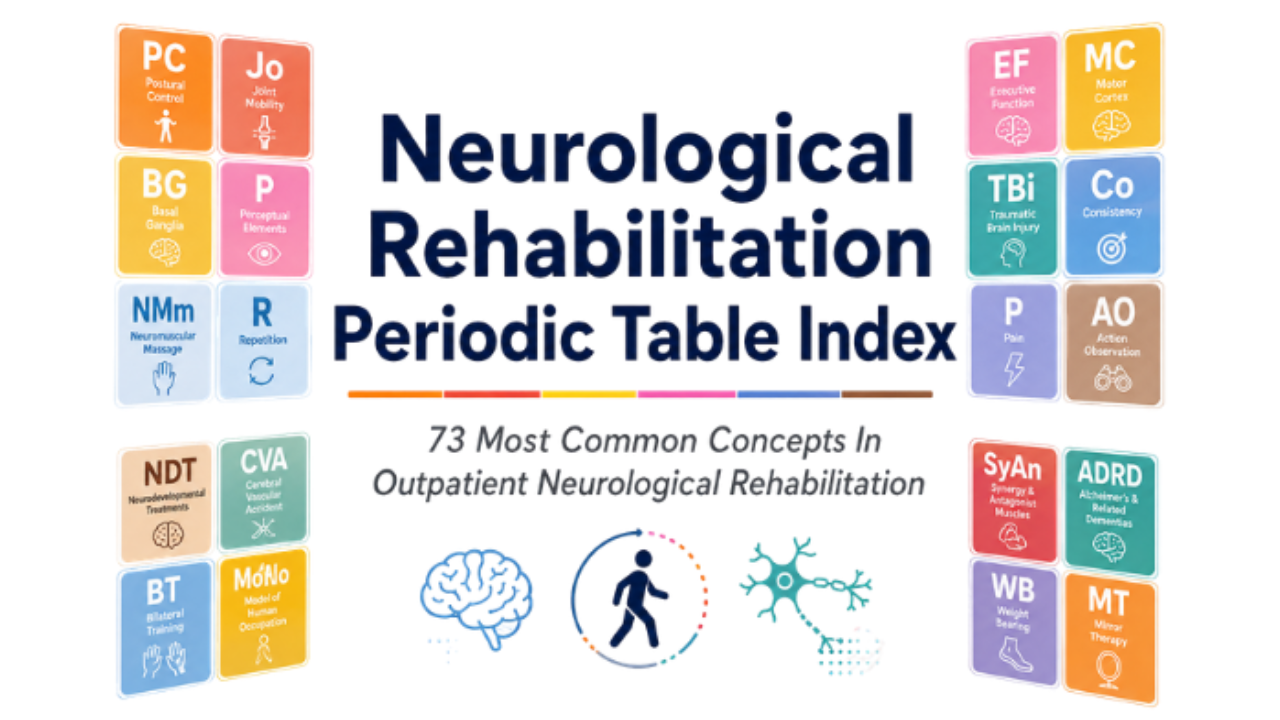
Neurological Rehabilitation Periodic Table Index
73 Most Common Concepts In Outpatient Neurological Rehabilitation
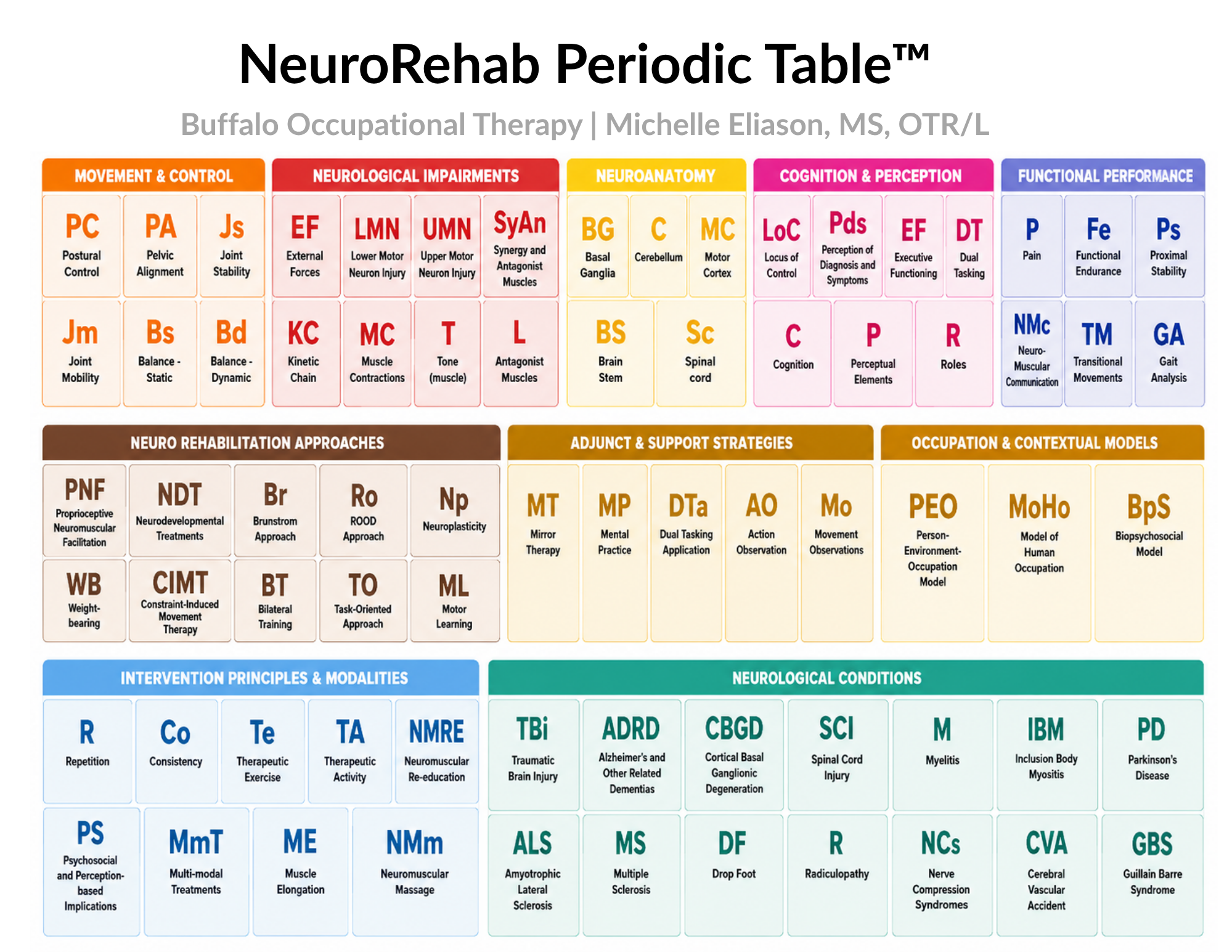
The Neurological Rehabilitation Periodic Table is a guide I have been developing for more than 10 years. It brings together the most common vocabulary, diagnoses, treatment approaches, and clinical concepts I have used throughout my career in neurological rehabilitation. Below is an index explaining the key terms included in the periodic table. I hope you find it helpful!
Member Resources: Links throughout the article connect members of Functional Cognition Lab Full Access Pro to related printables, treatment tools, courses, and clinical resources that align with the topic being discussed. Membership also includes access to the full resource library and direct clinical support.
Member Resource: Print the Neurorehab Periodic Table
Movement and Control
PC — Postural Control
Postural control is the ability to maintain the body’s position against internal and external forces while producing anticipatory postural adjustments before voluntary movement. It depends on the integration of motor, sensory, cognitive, musculoskeletal, biomechanical, and environmental information. Effective postural control supports balance, proximal stability, efficient extremity movement, and participation in ADLs, IADLs, mobility, and other meaningful occupations.
Member Resource: (1) Postural Analysis Reference guide (2) Posture Visual Handout
PA — Pelvic Alignment
Pelvic alignment influences the position and movement of the trunk, spine, and lower extremities. The pelvis connects the axial and appendicular skeletons and directly affects the lumbosacral junction, weight distribution, balance, and movement throughout the kinetic chain. Anterior, posterior, and lateral pelvic tilts may alter muscle length, spinal curves, center of gravity, and functional movement.
Member resource: The Pelvis Positioning Handout
Js — Joint Stability
Joint stability is the ability of a joint to maintain appropriate alignment and control during rest and movement. It depends on the interaction of joint structure, ligaments, muscles, proprioception, and neuromuscular control. Adequate joint stability allows a person to bear weight, move safely, manipulate objects, and complete functional activities without excessive movement, pain, or risk of injury.
Jm — Joint Mobility
Joint mobility is the available movement at a joint produced by the interaction of joint surfaces, connective tissue, muscles, and the nervous system. Functional mobility requires sufficient range for meaningful activity without excessive stiffness, pain, or instability. Limitations may affect reaching, dressing, transfers, gait, object manipulation, and other occupational tasks.
Bs — Balance: Static
Static balance is the ability to maintain the body’s center of mass over its base of support while remaining in a relatively fixed position. It is required for sitting, standing, grooming, dressing, toileting, and other activities that require sustained postural control.
Helpful Articles:
Bd — Balance: Dynamic
Dynamic balance is the ability to maintain or recover stability while the body moves, the base of support changes, or external demands are introduced. It supports reaching, walking, turning, transfers, stair negotiation, carrying objects, and participation in complex daily activities.
Neurological and Movement Impairments
EF — External Forces
External forces are physical forces acting upon the body from the environment. These include gravity, friction, momentum, resistance, surface changes, object weight, and contact with another person or object. Occupational performance requires the body to anticipate, absorb, and respond to these forces while maintaining alignment and control.
LMN — Lower Motor Neuron Injury
Lower motor neurons transmit signals from the spinal cord or brain stem to skeletal muscles. Injury may produce weakness, flaccidity, reduced or absent reflexes, muscle atrophy, fasciculations, and impaired voluntary movement within the affected muscles.
UMN — Upper Motor Neuron Injury
Upper motor neurons originate in the brain and transmit motor information to lower motor neurons. Injury may result in weakness, spasticity, hyperreflexia, abnormal synergies, impaired selective movement, reduced motor control, and pathological reflexes below the level of the lesion.
SyAn — Synergy and Antagonist Muscles
Muscle synergies are coordinated groups of muscles that work together to produce or stabilize movement. Antagonist muscles oppose, slow, or control the movement created by the primary muscle group. Functional movement requires appropriate timing and balance between agonists, antagonists, stabilizers, and synergists.
KC — Kinetic Chain
The kinetic chain describes how joints and body segments influence one another during movement. A change in one area, such as the pelvis, trunk, foot, or shoulder, may alter movement elsewhere in the body. Occupational therapy examines the entire movement system rather than treating an isolated joint or muscle without considering its functional relationships.
Member Resource: Anatomic Kinetic Chain Handout
MC — Muscle Contractions
Muscle contractions generate, control, or resist movement. Concentric contractions shorten a muscle, eccentric contractions lengthen a muscle under tension, and isometric contractions create force without visible joint movement. Functional activities typically require all three types of contraction in coordinated sequences.
Member Resource: Isometric vs. Isotonic Contractions Handout
T — Tone
Muscle tone is the background level of tension present within the muscular system. Neurological injury may produce reduced tone, flaccidity, hypertonicity, spasticity, or rigidity. Abnormal tone can interfere with positioning, movement initiation, selective control, balance, comfort, and occupational performance.
L — Antagonist Muscles
Antagonist muscles oppose or regulate the action of another muscle or muscle group. They help control movement speed, protect joints, maintain alignment, and allow smooth transitions between movement directions. Poor antagonist control may contribute to instability, stiffness, abnormal movement patterns, or inefficient co-contraction.
Neuroanatomy
BG — Basal Ganglia
The basal ganglia contribute to muscle tone, posture, equilibrium, movement planning, movement initiation, movement inhibition, and error correction. They also support the storage and automatic execution of previously learned motor patterns. Dysfunction may result in rigidity, hypertonicity, involuntary movement, dyskinesia, and difficulty initiating, stopping, or refining movement.
Member Resource: Basal Ganglia Patient Education Resource Packet
C — Cerebellum
The cerebellum compares sensory feedback from current movement with the intended movement and previous performance. It supports equilibrium, proprioceptive processing, motor timing, muscle-tone modulation, error correction, coordination, and the production of smooth and accurate movement. Dysfunction may result in ataxia, dysmetria, intention tremor, nystagmus, balance impairment, and errors in movement rate, range, direction, or force.
Functional Cognition Lab Newsletter: The Cerebellum is Not A Balance Organ
MC — Motor Cortex
The motor cortex supports voluntary movement and contains upper motor neurons involved in the initiation and control of purposeful action. Injury may contribute to weakness, impaired voluntary movement, apraxia, akinesia, abnormal tone, hyperreflexia, hemiplegia, impaired weight shifting, and difficulty initiating functional movement.
BS — Brain Stem
The brain stem integrates central nervous system activity and contributes to muscle tone, vestibular processing, respiratory rhythm, posture, balance, cranial nerve function, and the relationship between head and body position. Injury may affect facial movement, eye movement, balance, tone, breathing, transfers, bed mobility, and voluntary motor control.
Sc — Spinal Cord
The spinal cord transmits motor, sensory, and autonomic information between the brain and body. Injury may be traumatic or nontraumatic and may result in weakness, paralysis, sensory loss, pain, altered tone, autonomic dysfunction, impaired temperature regulation, respiratory limitations, and changes in bowel, bladder, or sexual function. The presentation depends on the neurological level, severity, and completeness of the injury.
Cognition and Perception
LoC — Locus of Control
Locus of control refers to whether a person believes that outcomes are primarily influenced by personal actions or by outside circumstances. An internal locus of control reflects the belief that effort and choices can make a difference. An external locus of control reflects the belief that outcomes are controlled by forces outside the person. Neurological injury, progressive disease, loss of independence, and disruption of meaningful roles may significantly affect perceived control.
Member Resource: Circle of Control Patient Handout
Pds — Perception of Diagnosis and Symptoms
Perception of diagnosis and symptoms refers to how a person understands, interprets, and emotionally responds to their health condition. Beliefs about symptoms, prognosis, personal ability, treatment, and recovery can influence motivation, coping, adherence, activity avoidance, self-efficacy, and participation in rehabilitation.
EF — Executive Functioning
Executive functions are higher-level cognitive abilities that organize behavior and coordinate lower-level cognitive processes. They include planning, problem-solving, sequencing, inhibition, cognitive flexibility, working memory, metacognition, insight, safety awareness, judgment, and strategic learning. Executive dysfunction may interfere with medication management, meal preparation, dressing, finances, driving, work, and other multistep occupations.
Helpful Functional Cognition Lab Newsletters:
- 5 executive functions - inhibition
- 5 executive functions -working memory
- 5 executive functions -cognitive flexibility
- 5 executive functions - planning and sequencing
- 5 executive functions - initiation
DT — Dual Tasking
Dual tasking combines cognitive processing with movement or the simultaneous performance of two activities. It places demands on attention, executive functioning, working memory, balance, motor control, and resource allocation. Impairment may become evident when a person walks while talking, carries an object while navigating, remembers information during movement, or completes another cognitive-motor activity.
Helpful Resource: Dual Tasking in Occupational Therapy
C — Cognition
Cognition includes the mental processes used to acquire, organize, remember, interpret, and apply information. It includes attention, memory, orientation, processing speed, language, reasoning, problem-solving, executive functioning, and metacognition. Cognitive abilities support safety, independence, decision-making, and successful participation in everyday occupations.
Member Resource: List of Cognitive Processes
P — Perceptual Elements
Perception is the ability to organize and interpret sensory information so that it can guide meaningful action. Perceptual processing supports recognition of people and objects, spatial awareness, body awareness, visual scanning, depth judgment, movement through the environment, and accurate interaction with tools and materials.
R — Roles
Roles are socially and personally meaningful patterns of responsibility, identity, and participation. Examples include parent, spouse, employee, caregiver, student, volunteer, friend, or community member. Illness or disability may disrupt valued roles, requiring adaptation, role resumption, role modification, or development of new patterns of participation.
Functional Performance
P — Pain
Pain is a sensory and emotional experience that may arise from tissue injury, neurological dysfunction, inflammation, mechanical stress, overuse, or central nervous system changes. Pain can alter posture, movement, sleep, cognition, mood, activity tolerance, and occupational participation.
Fe — Functional Endurance
Functional endurance is the ability to sustain physical, cognitive, and emotional effort during meaningful activity. It reflects more than isolated cardiovascular capacity and includes the ability to maintain movement quality, attention, posture, safety, and task performance over time.
Ps — Proximal Stability
Proximal stability is controlled support of the trunk, pelvis, shoulder girdle, and other central body structures. It provides a stable foundation for reaching, grasping, walking, manipulating objects, maintaining balance, and completing coordinated distal movement.
NMc — Neuromuscular Communication
Neuromuscular communication is the exchange of information between the nervous system and muscles that allows movement to be initiated, graded, coordinated, and corrected. It influences timing, force production, recruitment, tone, proprioception, postural responses, and motor learning.
TM — Transitional Movements
Transitional movements are changes from one body position to another, including rolling, bridging, moving from supine to sitting, sit-to-stand, transfers, and repositioning. Efficient transitions require postural control, strength, balance, sequencing, weight shifting, motor planning, and appropriate muscle tone.
Member Resource: Simple List and Explain of Transitional Movements
GA — Gait Analysis
Gait analysis is the systematic observation of walking performance. It includes assessment of posture, symmetry, step pattern, weight shifting, balance, cadence, speed, joint movement, tone, endurance, pain behaviors, compensatory movements, and changes that occur with fatigue, distraction, or environmental demands.
Helpful Resource: 8 Occupational Therapy Activities for Balance and Functional Mobility and Ambulation
Neurorehabilitation Approaches
For more on my philosophy related to "tools in one's toolbox" and using "outdated methods" please read the helpful resource on Managing and Inhibiting Spasticity. Happy to discuss my philosophy with you. :-)
PNF — Proprioceptive Neuromuscular Facilitation
Proprioceptive neuromuscular facilitation uses sensory input, resistance, stretch, manual contact, and diagonal movement patterns to facilitate coordinated neuromuscular responses. It may be used to address strength, flexibility, motor control, balance, and functional movement.
NDT — Neurodevelopmental Treatment
Neurodevelopmental treatment is a hands-on clinical approach used to analyze and facilitate functional movement in individuals with neurological impairment. It emphasizes postural alignment, movement quality, sensory-motor integration, handling, and task performance within meaningful activity.
Br — Brunnstrom Approach
The Brunnstrom approach describes motor recovery after stroke as progressing through stages of flaccidity, emerging synergy, voluntary control of synergy, movement outside synergy, and increasingly coordinated movement. Treatment uses available movement while gradually encouraging more selective motor control.
Ro — Rood Approach
The Rood approach uses sensory stimulation and developmental movement principles to influence muscle activation, inhibition, posture, and motor response. Techniques may include tactile input, pressure, movement, temperature, resistance, and weight-bearing.
Np — Neuroplasticity
Neuroplasticity is the nervous system’s ability to reorganize its structure, connections, and function in response to experience, practice, injury, and environmental demands. Rehabilitation uses repetition, intensity, salience, task specificity, feedback, and progressive challenge to promote adaptive change.
WB — Weight-Bearing
Weight-bearing places controlled pressure through an extremity or body segment. It may provide proprioceptive input, support joint alignment, improve stability, influence tone, promote bone health, and prepare the body for transfers, standing, mobility, and functional activity.
CIMT — Constraint-Induced Movement Therapy
Constraint-induced movement therapy promotes use of an affected upper extremity by limiting use of the less-affected extremity and providing intensive, repetitive, task-specific practice. It is intended to reduce learned nonuse and increase functional use of the affected arm.
BT — Bilateral Training
Bilateral training involves coordinated use of both sides of the body during simultaneous or alternating movement. It may support motor recovery, bilateral integration, postural control, timing, coordination, and performance of tasks that naturally require two-handed participation.
TO — Task-Oriented Approach
A task-oriented approach emphasizes practice of meaningful, goal-directed activities within relevant environments. Movement is trained in relation to the person, task, and context rather than as an isolated motor exercise.
ML — Motor Learning
Motor learning is the process through which practice and experience produce lasting changes in movement capability. It is influenced by repetition, task specificity, feedback, motivation, problem-solving, variability, environmental context, and opportunities to correct errors.
Adjunct and Support Strategies
MT — Mirror Therapy
Mirror therapy uses the reflection of an unaffected limb to create the visual impression that the affected limb is moving normally. It may be used to support motor activation, body representation, sensory processing, pain management, and upper-extremity rehabilitation.
MP — Mental Practice
Mental practice is the cognitive rehearsal of a movement or activity without completing the full physical action. It activates movement-related neural systems and may supplement physical practice when movement is limited, fatiguing, or difficult.
DTa — Dual-Tasking Application
Dual-tasking application is the deliberate addition of a secondary cognitive or motor demand to a primary activity. It is used to examine and improve divided attention, automaticity, cognitive-motor integration, safety, and performance under real-world conditions.
AO — Action Observation
Action observation involves watching another person perform a meaningful movement or task. Observation may activate motor-related neural networks and can be paired with imitation, mental rehearsal, or physical practice to support motor learning.
Mo — Movement Observation
Movement observation is the systematic analysis of how a person moves during bed mobility, sitting, standing, transitions, and ambulation. The therapist examines posture, tone, range of motion, relaxation, head and trunk control, weight shifting, bilateral integration, effort, tremor, compensatory movement, pain behavior, and changes with fatigue.
Occupation and Contextual Models
PEO — Person-Environment-Occupation Model
The Person-Environment-Occupation model explains occupational performance as the result of the interaction among the individual, the environment, and the occupation. Performance may improve by changing the person’s skills, modifying the environment, adapting the task, or improving the fit among all three components.
MoHO — Model of Human Occupation
The Model of Human Occupation explains participation through volition, habituation, performance capacity, and environmental context. It considers motivation, personal values, interests, habits, routines, roles, abilities, and the environments in which occupations occur.
BpS — Biopsychosocial Model
The biopsychosocial model considers the interaction of biological, psychological, and social influences on health and disability. It recognizes that symptoms and occupational performance are shaped by the body, emotions, beliefs, relationships, roles, environment, culture, and access to resources.
Intervention Principles and Modalities
R — Repetition
Repetition is repeated performance of a movement, strategy, or activity to strengthen learning and improve consistency. Effective repetition should remain purposeful, appropriately challenging, and connected to the functional outcome being developed.
Co — Consistency
Consistency is regular participation in therapeutic practice across time, settings, and daily routines. Consistent practice supports learning, habit formation, carryover, endurance, and the development of more automatic performance.
Te — Therapeutic Exercise
Therapeutic exercise is the planned use of movement to address strength, range of motion, flexibility, endurance, balance, coordination, or motor control. It supports occupational performance when selected and graded according to the person’s functional needs.
TA — Therapeutic Activity
Therapeutic activity uses dynamic, functional, and goal-directed tasks to improve performance skills. Activities may address reaching, lifting, carrying, balance, coordination, cognition, object manipulation, and other abilities needed for everyday occupation.
NMRE — Neuromuscular Re-education
Neuromuscular re-education retrains movement, posture, balance, coordination, proprioception, kinesthetic awareness, and neuromuscular control. It may include guided movement, weight shifting, facilitation, inhibition, sensory feedback, balance challenges, and task-specific motor practice.
PS — Psychosocial and Perception-Based Implications
Psychosocial and perception-based implications include the effects of beliefs, emotions, motivation, confidence, symptom interpretation, perceived control, relationships, and social context on rehabilitation. These factors influence participation, adherence, coping, activity tolerance, and occupational identity.
MmT — Multimodal Treatments
Multimodal treatment combines multiple intervention methods to address interacting impairments and functional needs. A session may integrate therapeutic exercise, neuromuscular re-education, cognition, sensory input, education, adaptive strategies, and occupation-based activity.
ME — Muscle Elongation
Muscle elongation involves lengthening muscles and related soft tissues that have become shortened, overactive, or restricted. It may support joint mobility, alignment, comfort, movement efficiency, positioning, and preparation for functional activity.
NMm — Neuromuscular Massage
Neuromuscular massage uses focused soft-tissue techniques to address muscular tension, trigger points, pain, altered tissue mobility, and neuromuscular dysfunction. It may be used as an adjunct to movement training and functional activity rather than as an isolated intervention.
Neurological Conditions
TBI — Traumatic Brain Injury
Traumatic brain injury is disruption of brain function caused by an external force. It may affect attention, memory, executive function, emotional regulation, sensory processing, vision, balance, motor control, fatigue, behavior, communication, and participation in daily life.
ADRD — Alzheimer’s Disease and Other Related Dementias
Alzheimer’s disease and related dementias include Alzheimer’s disease, frontotemporal dementia, Lewy body dementia, vascular dementia, and other progressive neurocognitive conditions. These disorders may affect memory, behavior, emotion, executive function, language, movement, visual processing, gait, safety, and independence.
Alzheimer’s disease is associated with cortical atrophy, amyloid-beta plaques, and tau neurofibrillary tangles. Lewy body dementia may involve hallucinations, parkinsonism, autonomic dysfunction, falls, REM-sleep disturbance, memory impairment, and executive dysfunction. Vascular dementia is associated with cerebrovascular disease and may produce cognitive decline and gait disturbance.
CBGD — Cortical Basal Ganglionic Degeneration
Cortical basal ganglionic degeneration is a progressive neurological condition affecting cortical and basal ganglia systems. It may produce asymmetrical rigidity, apraxia, dystonia, cortical sensory loss, alien-limb phenomena, cognitive changes, speech impairment, and progressive loss of functional movement.
SCI — Spinal Cord Injury
Spinal cord injury disrupts motor, sensory, and autonomic communication below the level of injury. It may result in paraplegia, tetraplegia, weakness, paralysis, altered sensation, pain, spasticity, skin-integrity risk, respiratory impairment, autonomic dysreflexia, orthostatic hypotension, and changes in bowel, bladder, sexual, and temperature-regulation functions.
M — Myelitis
Myelitis is inflammation of the spinal cord that may disrupt motor, sensory, and autonomic pathways. Symptoms may include weakness, pain, altered sensation, changes in tone, impaired walking, fatigue, and bowel or bladder dysfunction.
IBM — Inclusion Body Myositis
Inclusion body myositis is a progressive muscle disease characterized by weakness, often affecting the quadriceps, finger flexors, and swallowing muscles. It may interfere with transfers, stair negotiation, walking, grasp, feeding, dressing, and other daily activities.
PD — Parkinson’s Disease
Parkinson’s disease is a progressive neurological condition associated with degeneration of dopamine-producing systems and the presence of Lewy bodies. It may involve bradykinesia, rigidity, tremor, postural instability, stooped posture, reduced movement amplitude, and gait impairment.
Nonmotor symptoms may include reduced smell, constipation, REM-sleep behavior disorder, mood changes, urinary urgency, rhinorrhea, orthostatic hypotension, cognitive changes, and autonomic dysfunction.
ALS — Amyotrophic Lateral Sclerosis
Amyotrophic lateral sclerosis is a progressive motor neuron disease affecting upper and lower motor neurons. It causes increasing weakness, muscle atrophy, fasciculations, spasticity, impaired mobility, reduced upper-extremity function, dysarthria, dysphagia, and respiratory decline.
MS — Multiple Sclerosis
Multiple sclerosis is an immune-mediated condition that damages myelin within the central nervous system. Symptoms may include fatigue, weakness, sensory changes, visual impairment, spasticity, balance dysfunction, pain, cognitive changes, and fluctuating functional performance.
DF — Drop Foot
Drop foot is difficulty lifting the front of the foot during walking because of weakness, impaired motor control, or nerve dysfunction. It may produce toe drag, compensatory hip or knee movement, reduced gait efficiency, and increased fall risk.
R — Radiculopathy
Radiculopathy is dysfunction of a spinal nerve root caused by compression, inflammation, or irritation. It may produce radiating pain, numbness, tingling, weakness, or altered reflexes along the affected nerve distribution.
NCs — Nerve Compression Syndromes
Nerve compression syndromes occur when a peripheral nerve is compressed or irritated by surrounding tissue, repetitive movement, positioning, inflammation, or structural narrowing. Symptoms may include pain, numbness, tingling, weakness, reduced dexterity, and impaired functional use of the affected body region.
CVA — Cerebral Vascular Accident
A cerebral vascular accident, or stroke, occurs when blood flow to part of the brain is interrupted by an ischemic or hemorrhagic event. Stroke may affect movement, sensation, vision, perception, language, cognition, balance, coordination, emotional regulation, and participation in daily occupations.
GBS — Guillain-Barré Syndrome
Guillain-Barré syndrome is an acute immune-mediated disorder affecting peripheral nerves. It commonly causes rapidly progressing symmetrical weakness, reduced reflexes, sensory symptoms, pain, fatigue, and possible respiratory or autonomic involvement.
Continue Learning With Us
Did you find this information helpful? Please share this article with another occupational therapy practitioner, student, educator, or rehabilitation professional who may benefit from it.
Would you like access to the clinical resources discussed throughout this article? Explore our membership options to find the level of support that works best for you.
Looking for a more formal learning and mentorship experience? Learn more about the Functional Cognition Lab Mentorship Program.
You can also explore our AOTA-approved courses and clinical resource packages for additional education, treatment resources, and practical tools you can use in rehabilitation practice.
Interested in receiving free functional cognition education each week? Subscribe to the Functional Cognition Lab Newsletter.