Top 10 Strategies for Managing Spastic Hemiparesis and Hemiplegia
Aug 04, 2024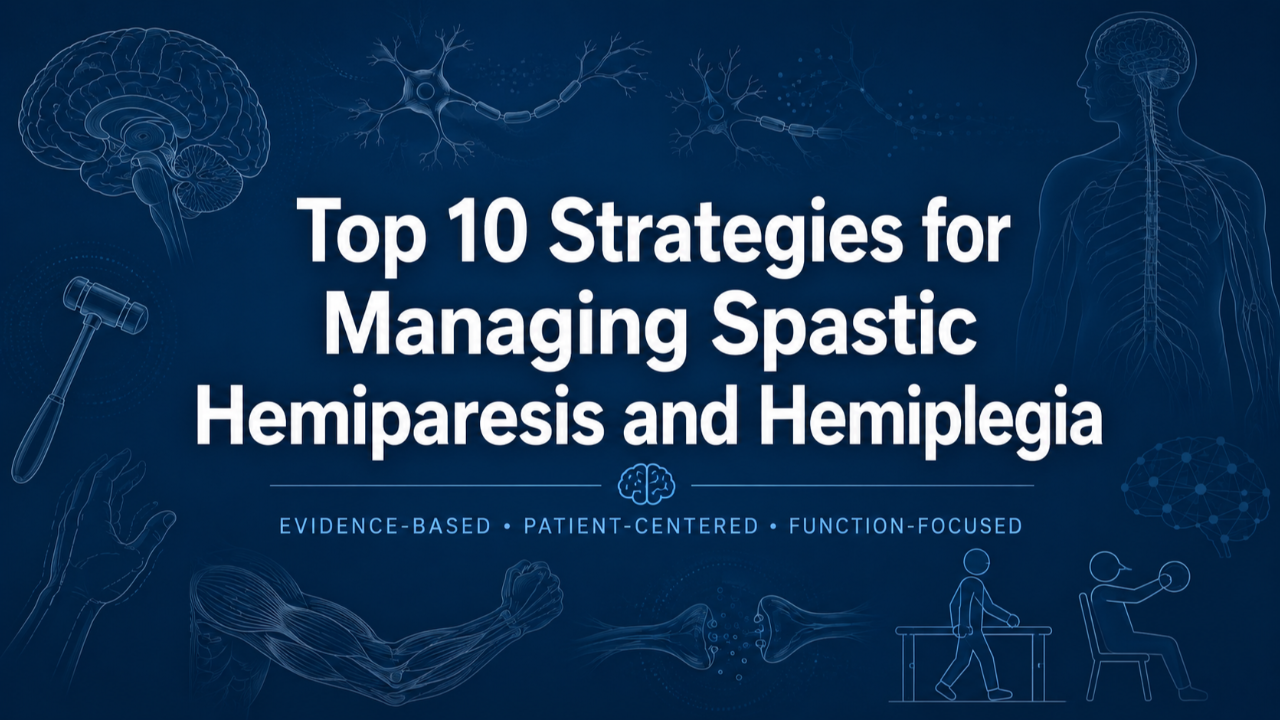
Top 10 Occupational Therapy Strategies for Managing Spastic Hemiparesis and Hemiplegia
by Michelle C. Eliason, MS, OTR/L
Resource: Checkout this helpful resource page on stroke.
Membership Resources: This article and its companion audio are free to read and listen to. Links throughout the article connect members of the Functional Cognition Lab to related printables, treatment tools, courses, and clinical resources that align with the topic being discussed. Membership also includes access to the full resource library and direct clinical support. Find out more about membership on the Membership Options Page
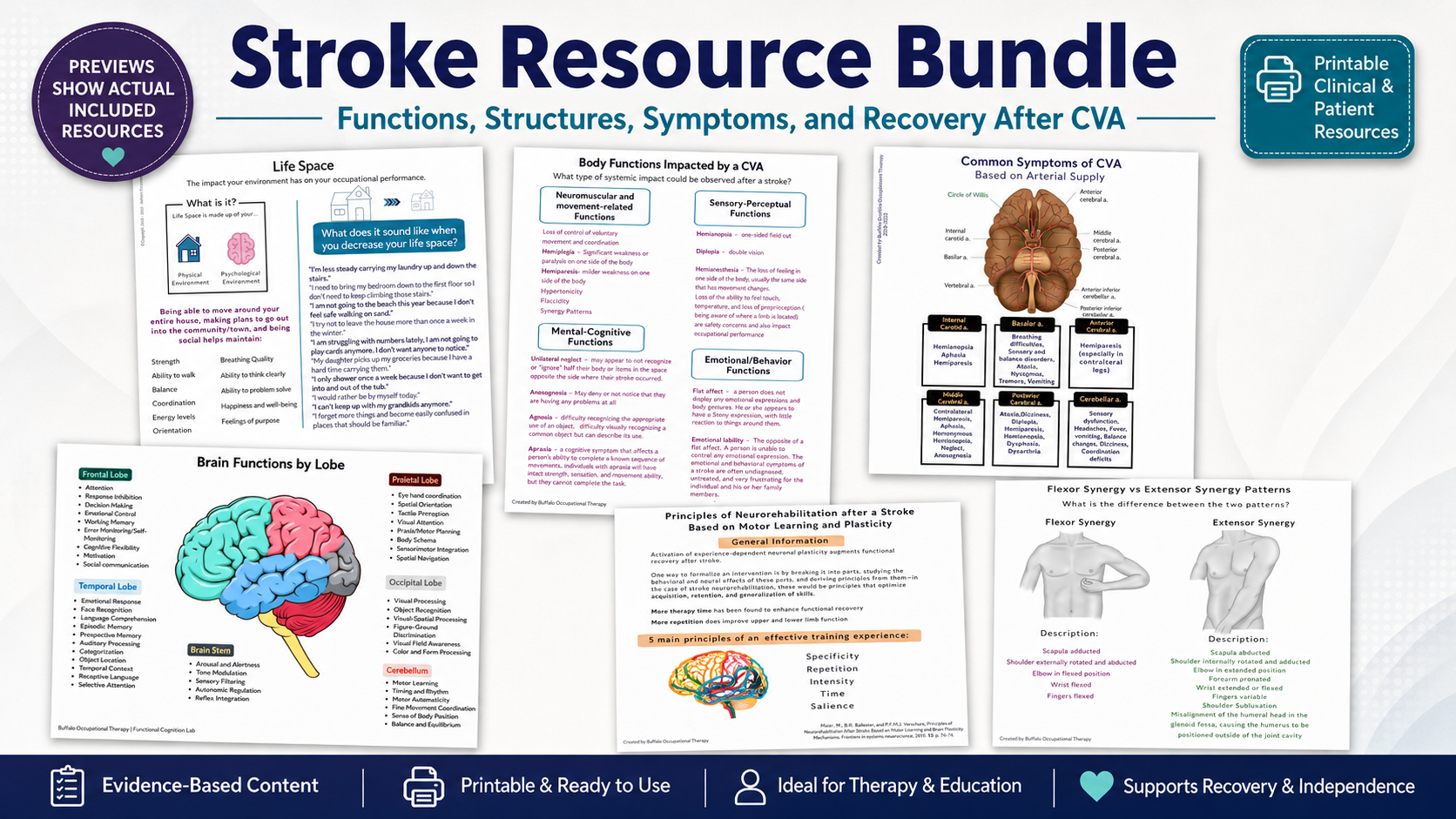
Just want the some of the resources mentioned in this article? Download the Stroke Resource Bundle:
Spastic hemiparesis and hemiplegia are common after neurological conditions such as stroke, cerebral palsy, traumatic brain injury, and other disorders affecting the central nervous system.
Spasticity may cause increased muscle tone, stiffness, involuntary muscle activation, pain, difficulty with movement, and reduced participation in daily activities. It can affect dressing, hygiene, positioning, transfers, walking, upper-extremity use, sleep, comfort, and caregiver assistance.
The strategies below reflect a combination of rehabilitation research, neurological treatment principles, physiological reasoning, and clinical experience.
Not every intervention has been studied with the same depth or methodological quality. Limited or mixed research does not automatically mean that a strategy has no clinical value. Occupational therapy practitioners must combine published evidence with clinical expertise, patient response, safety, functional goals, and the realities of the treatment environment.
The goal is not always to eliminate spasticity. The goal may be to improve comfort, positioning, movement quality, range of motion, participation, or functional use of the affected side.
1. Deep Breathing
Deep breathing can help prepare the nervous system for movement.
Slow diaphragmatic breathing may reduce stress, decrease sympathetic nervous system activation, and promote relaxation. This can be especially helpful when muscle tone increases with anxiety, effort, pain, fear, or overstimulation.
Deep breathing may be used before stretching, movement practice, transfers, or functional activities.
The goal is not to suggest that breathing alone will eliminate spasticity. Instead, it may help reduce overall tension and create a better state for movement.
2. Deep Tendon Compression
Deep tendon compression is a proprioceptive technique that may influence muscle tone and body awareness.
The practitioner applies firm, sustained pressure through a tendon or muscle-tendon region. This input may help the patient become more aware of the affected limb and may temporarily support relaxation or improved movement preparation.
This strategy is often most useful when combined with positioning, slow movement, stretching, weight-bearing, or task-specific activity.
Patient comfort and response should always guide the amount of pressure used.
3. Weight-Bearing Activities
Weight-bearing provides sustained proprioceptive input through the joints and muscles.
Examples may include:
- Weight-bearing through the affected arm while sitting
- Modified push-ups against a wall or table
- Supported standing
- Reaching while stabilizing through the affected side
- Weight shifting during transfers or balance activities
Weight-bearing may support joint alignment, postural stability, sensory awareness, and functional use of the affected limb.
Some patients demonstrate a temporary reduction in excessive muscle activation after sustained weight-bearing. Others benefit more from the improved stability and sensory feedback it provides.
The activity should be positioned carefully to protect the shoulder, wrist, hand, knee, and ankle.
4. Slow Elongated Stretching
On the fence about Stretching post-Stroke? Read what research says in this blog article: Things to Know about Stretching Spasticity post-Stroke
Member Resources:
- Stretching and Spasticity Clinician Resource ( 2 pages)
- Clinical Application of Stretching for Spasticity (2 pages)
- Patient-facing resource packet on stretching and spasticity (4 pages)
Slow stretching can help address stiffness and maintain muscle length.
Spastic muscles should generally be moved slowly because rapid movement may trigger a stronger stretch response and increase resistance.
The therapist may place the muscle in a lengthened position and gradually increase the stretch while monitoring pain, breathing, joint alignment, and muscle response.
Slow stretching may help:
- Preserve range of motion
- Improve comfort
- Prepare the limb for activity
- Reduce the risk of contracture
- Support positioning and hygiene
The effects may be temporary, but temporary improvement can still be valuable when it allows the patient to participate more successfully in a meaningful activity.
5. Sensory Stimulation
Sensory input may affect muscle tone, movement awareness, and motor performance.
Examples include:
- Gentle massage
- Tactile stimulation
- Vibration
- Temperature-based input
- Proprioceptive input
- Textured materials
- Guided contact with the affected limb
Sensory stimulation should be individualized. Some types of input may help one patient relax while increasing tone or discomfort in another.
Cold-based techniques should be used cautiously because prolonged or intense cold may affect sensation, circulation, skin integrity, or muscle response.
The practitioner should observe how the patient responds rather than assuming that one sensory technique will work for everyone.
6. Neurodevelopmental Treatment
Neurodevelopmental Treatment, also known as NDT or the Bobath Concept, uses handling, alignment, sensory input, postural control, movement facilitation, and task practice to support more efficient movement.
NDT continues to be researched, and the evidence remains mixed.
Some systematic reviews have found that NDT is not consistently superior to other rehabilitation approaches. However, lack of superiority does not mean that the approach has no clinical value.
Many occupational therapy practitioners use selected NDT principles within broader, individualized treatment plans. These principles may help with:
- Positioning
- Trunk control
- Movement preparation
- Weight shifting
- Upper-extremity alignment
- Guided movement
- Postural stability
- Functional task performance
NDT should not be treated as the only available approach. It can be combined with repetitive task practice, strengthening, motor learning, environmental modification, and occupation-based intervention.
Practitioners should remain informed, observe patient response, and avoid dismissing an entire methodology simply because the available literature is mixed or because another approach performed similarly in a particular study. Rehabilitation research is influenced by intervention dosage, clinician skill, study design, participant variability, outcome selection, funding priorities, and publication bias. Research is important, but it must be interpreted thoughtfully.
Clinicians also do not need to follow a complete NDT protocol to gain value from individual concepts within the approach. For example, key points of control can help a practitioner guide movement, support alignment, facilitate weight shifting, or improve safety during transfers and functional activities. Many older rehabilitation approaches contain useful handling principles, movement observations, and clinical tools that can be integrated into contemporary, task-specific practice. A methodology does not need to be adopted in its entirety for selected concepts to remain clinically valuable.
7. Slow and Methodical Movements
Fast or sudden movement may increase muscle resistance in a person with spasticity.
Slow, controlled movement allows the patient more time to process sensory information, prepare the body, and maintain control.
The therapist may encourage the patient to:
- Pause before beginning
- Breathe throughout the movement
- Move through the available range slowly
- Avoid pulling or forcing the limb
- Focus on alignment
- Complete one part of the task at a time
Slow movement can be especially helpful during dressing, transfers, reaching, hand opening, walking, and caregiver-assisted movement.
The goal is purposeful movement, not simply slower movement for its own sake.
8. Prolonged Stretching and Positioning
Helpful Resource: Why PNF Still Belongs in the Rehabilitation Toolbox
Prolonged stretching involves maintaining a muscle in a lengthened position for an extended period.
This may be completed through:
- Therapeutic positioning
- Splinting
- Orthotic devices
- Serial casting
- Supported standing
- Resting hand positioning
- Carefully selected home programs
Member Resource: 'What is Research Saying about Stretching for Spasticity?' - 3 pg stretching guide for spasticity
Prolonged positioning may help maintain range of motion, reduce stiffness, support joint alignment, and prevent secondary complications.
This strategy is especially important when a patient is at risk for contracture or has difficulty independently moving the affected limb.
The duration and intensity should be individualized. Poorly fitted splints, excessive force, or prolonged positioning without skin checks can cause pain, pressure, or injury.
9. Visual Biofeedback
Visual biofeedback helps patients observe their movement in real time.
Mirrors, video recordings, screens, or other feedback systems can help patients recognize asymmetry, excessive effort, compensatory movement, or poor alignment.
Visual feedback may improve:
- Motor awareness
- Movement accuracy
- Postural alignment
- Symmetry
- Motor learning
- Self-correction
- Attention to the affected side
Visual biofeedback may not directly eliminate spasticity, but it can help patients learn how to move with less unnecessary effort and better control.
It should be paired with meaningful practice and clear instructions.
10. Relaxation Techniques
Relaxation techniques may help reduce overall muscle tension and improve comfort.
Examples include:
- Guided imagery
- Progressive muscle relaxation
- Body scanning
- Slow breathing
- Quiet music
- Reduced environmental stimulation
- Gentle positioning
- Mindfulness-based practice
These techniques may be particularly helpful when spasticity increases with stress, fatigue, pain, frustration, or overstimulation.
Relaxation can also improve the patient’s willingness to participate in stretching, movement practice, and functional activity.
The intervention should match the patient’s cognitive abilities, preferences, and comfort level.
Choosing the Right Strategy
No single technique works for every patient.
A strategy that helps one person may have little effect on another. Spasticity may also change throughout the day based on pain, fatigue, emotion, temperature, medication timing, positioning, illness, or activity level.
Occupational therapy practitioners should consider:
- What triggers the increase in tone
- Whether pain is present
- Whether the spasticity interferes with function
- Whether the tone is helping with standing or transfers
- The patient’s available range of motion
- Skin integrity
- Joint alignment
- Cognitive status
- Sensation
- Functional goals
- Patient and caregiver preferences
Treatment should be based on the patient’s response, not only on the name of the technique.
A bonus intervention:
Functional Goals of Spasticity Management
The purpose of intervention is not simply to make a muscle feel less tight.
Spasticity management should support meaningful outcomes such as:
- Improved dressing
- Easier hygiene
- Safer transfers
- Better hand opening
- Reduced pain
- Improved sleep
- Better positioning
- Increased use of the affected limb
- Improved walking
- Greater caregiver ease
- Prevention of contracture
- Increased participation in daily activities
Member Resource: Adaptive Strategies and Tools for Functional Activities - 'Alternative Approaches to Functional Activities'
Some patients may also require interdisciplinary management.
Medical treatment may include oral medications, botulinum toxin injections, intrathecal medication, orthopedic management, or other procedures. These approaches are often most effective when combined with rehabilitation, stretching, positioning, movement practice, and functional training.
Member Resource: Stroke Rehabilitation Talking Points
Final Thoughts
Spasticity is complex.
It is influenced by the nervous system, the musculoskeletal system, the environment, the task, the patient’s emotional state, and the way movement is performed.
Deep breathing, tendon compression, weight-bearing, stretching, sensory stimulation, NDT principles, slow movement, prolonged positioning, visual biofeedback, and relaxation techniques may all have a place in occupational therapy practice when used thoughtfully.
Not every strategy will produce the same response in every person. Not every useful clinical technique has been studied under ideal research conditions.
Practitioners should continue to read the evidence, question the evidence, observe the patient, document the response, and connect every intervention to meaningful function.
Evidence-based practice does not mean following research findings without thought.
It means integrating research, clinical expertise, patient values, safety, and real-world response to provide the best possible care.
About the Author
Michelle Eliason, MS, OTR/L is an occupational therapist, rehabilitation researcher, educator, and founder of BOT Portal and Buffalo Occupational Therapy. Her clinical and scholarly work focuses on neurological rehabilitation, functional cognition, cognitive-motor performance, aging, and the translation of rehabilitation science into practical occupational therapy evaluation, intervention, and clinical reasoning.
Learn more about : Michelle C. Eliason, MS, OTR/L
Continue Learning With Us
A note for those looking for tips on how to really understand these neuromotor concepts:
Did you find this information helpful? Please share this article with another occupational therapy practitioner, student, educator, or rehabilitation professional who may benefit from it.
Would you like access to the clinical resources discussed throughout this article? Explore our membership options to find the level of support that works best for you.
Looking for a more formal learning and mentorship experience? Learn more about the Functional Cognition Lab Mentorship Program.
You can also explore our AOTA-approved courses and clinical resource packages for additional education, treatment resources, and practical tools you can use in rehabilitation practice.
Interested in receiving free functional cognition education each week? Subscribe to the Functional Cognition Lab Newsletter.