You’ve seen it.
A patient says:
👉 “I just can’t remember anything”
But then…
- they follow some instructions
- they recall parts of a conversation
- they complete parts of a task
So what’s actually happening?
Here’s the shift:
👉 Memory is not the starting problem.
Most of the time—
👉 attention is.
The Attention System (What Comes First)
Before memory ever happens, the brain has to:
- register information
- stay with it
- filter out distractions
If that fails—
👉 nothing gets stored
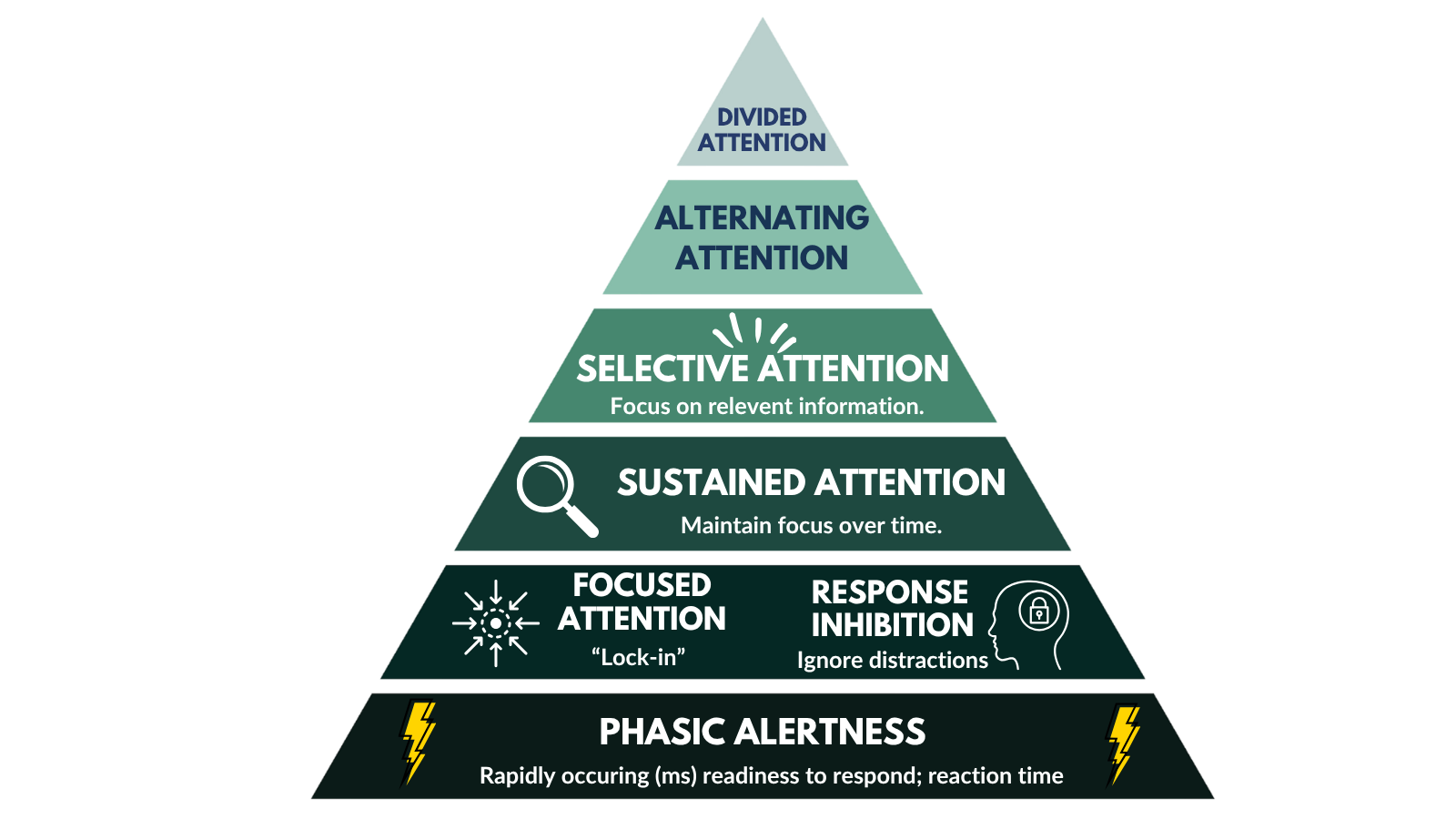
The Attention Pyramid (Clinically)
Attention builds in layers:
- Focused → can they attend at all?
- Sustained → can they stay with it over time?
- Selective → can they ignore distractions?
- Alternating → can they switch and return?
- Divided → can they manage multiple demands?
But here’s what most clinicians miss:
👉 If the bottom breaks, everything above it fails.
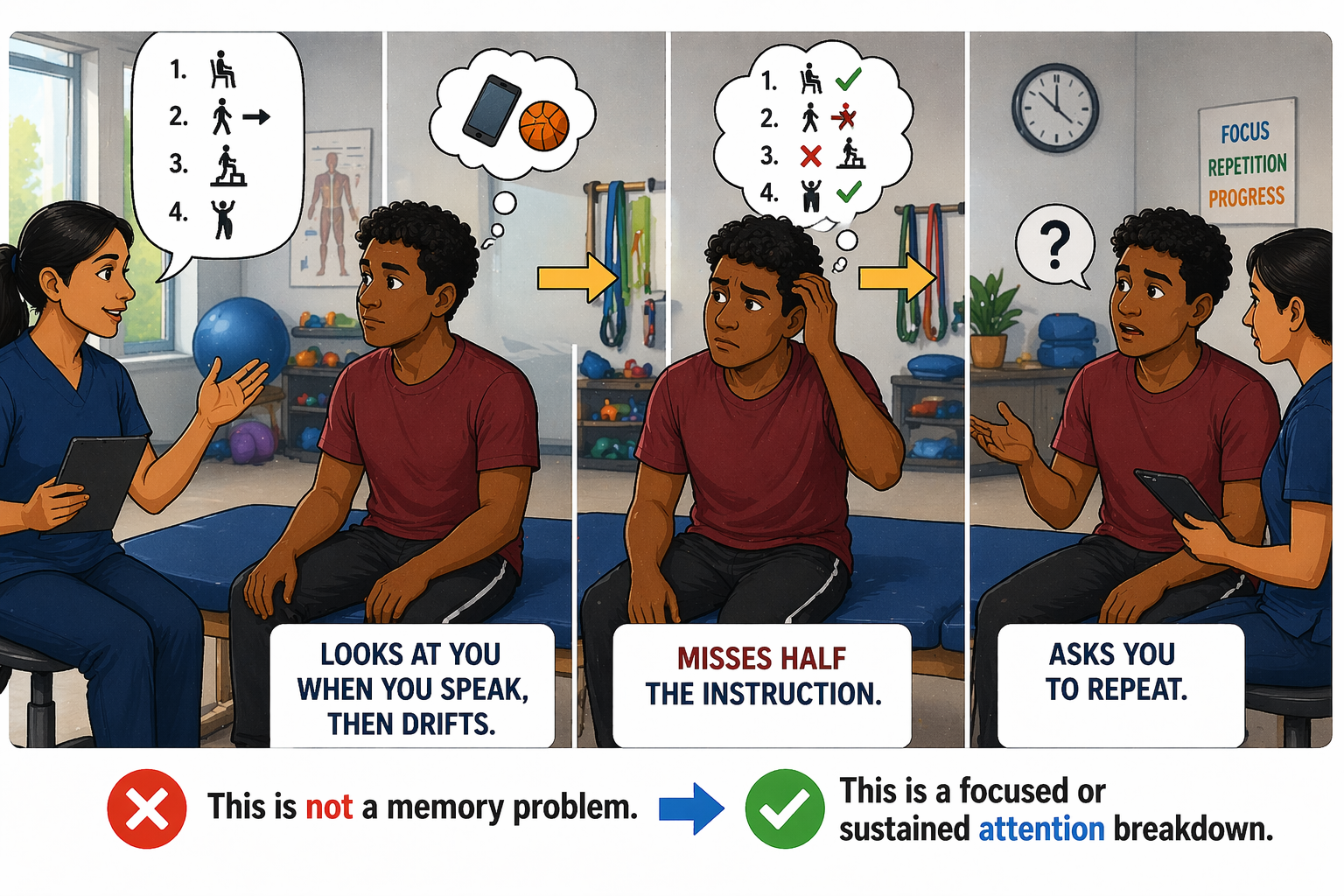
Real Example (Everyday Practice)
A patient in therapy:
- looks at you when you speak
- then drifts
- misses half the instruction
- asks you to repeat
This is not a memory problem.
👉 This is a focused or sustained attention breakdown
The Shift
When a patient “can’t remember,” the question is not:
👉 “How do I train memory?”
It’s:
👉 “Where is the attention system breaking down?”
The Clinical Reality: Attention → Memory Pipeline
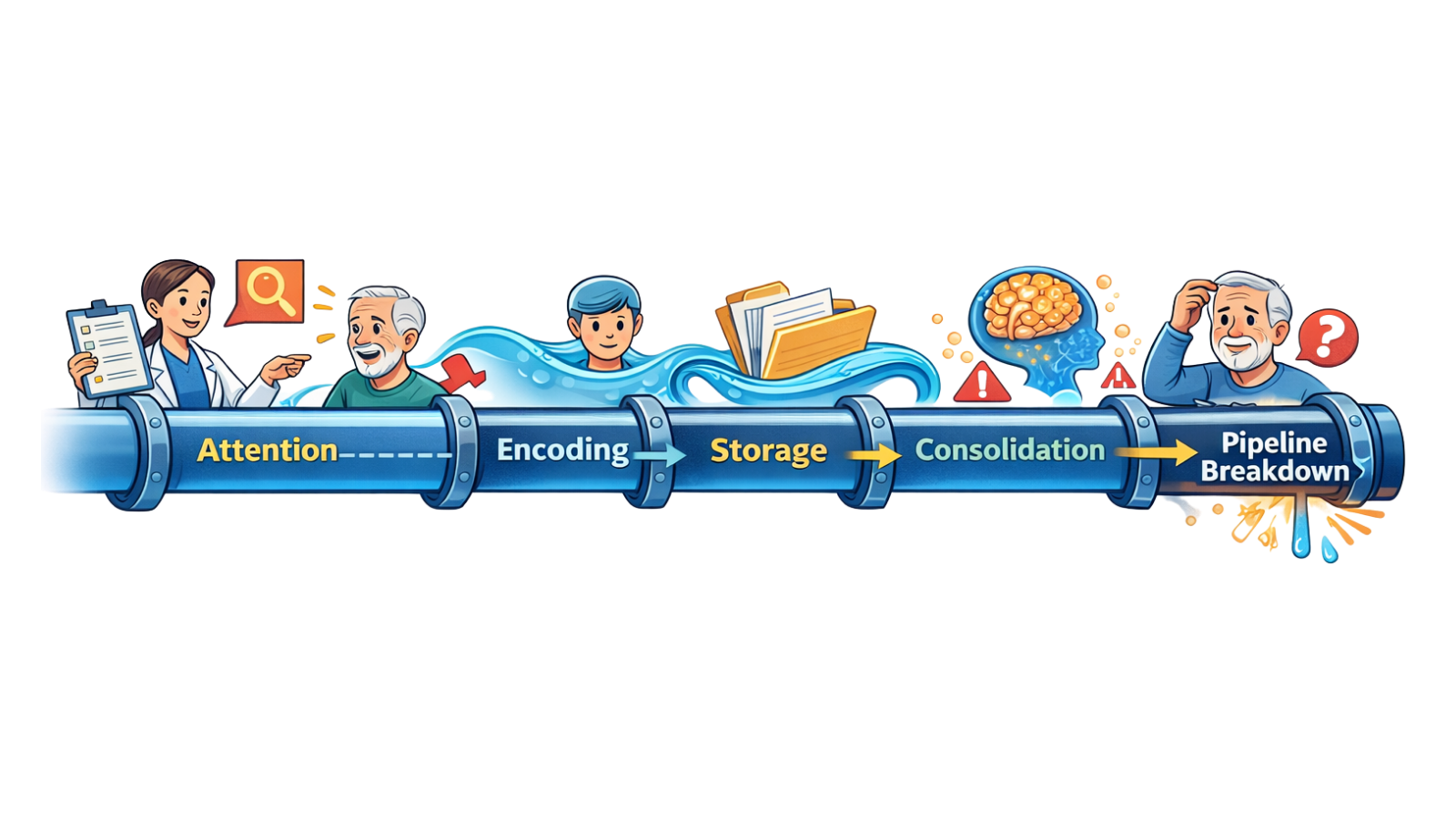 Memory is not a single function.
It is a process.
And it follows the same sequence every time:
- Attention
- Encoding
- Storage
- Consolidation
- Retrieval
If one step fails—
👉 the entire system fails
Step 1: Identify Where the Breakdown Is
Stop treating “memory” as the problem.
Instead, ask:
👉 Where in the pipeline is it failing?
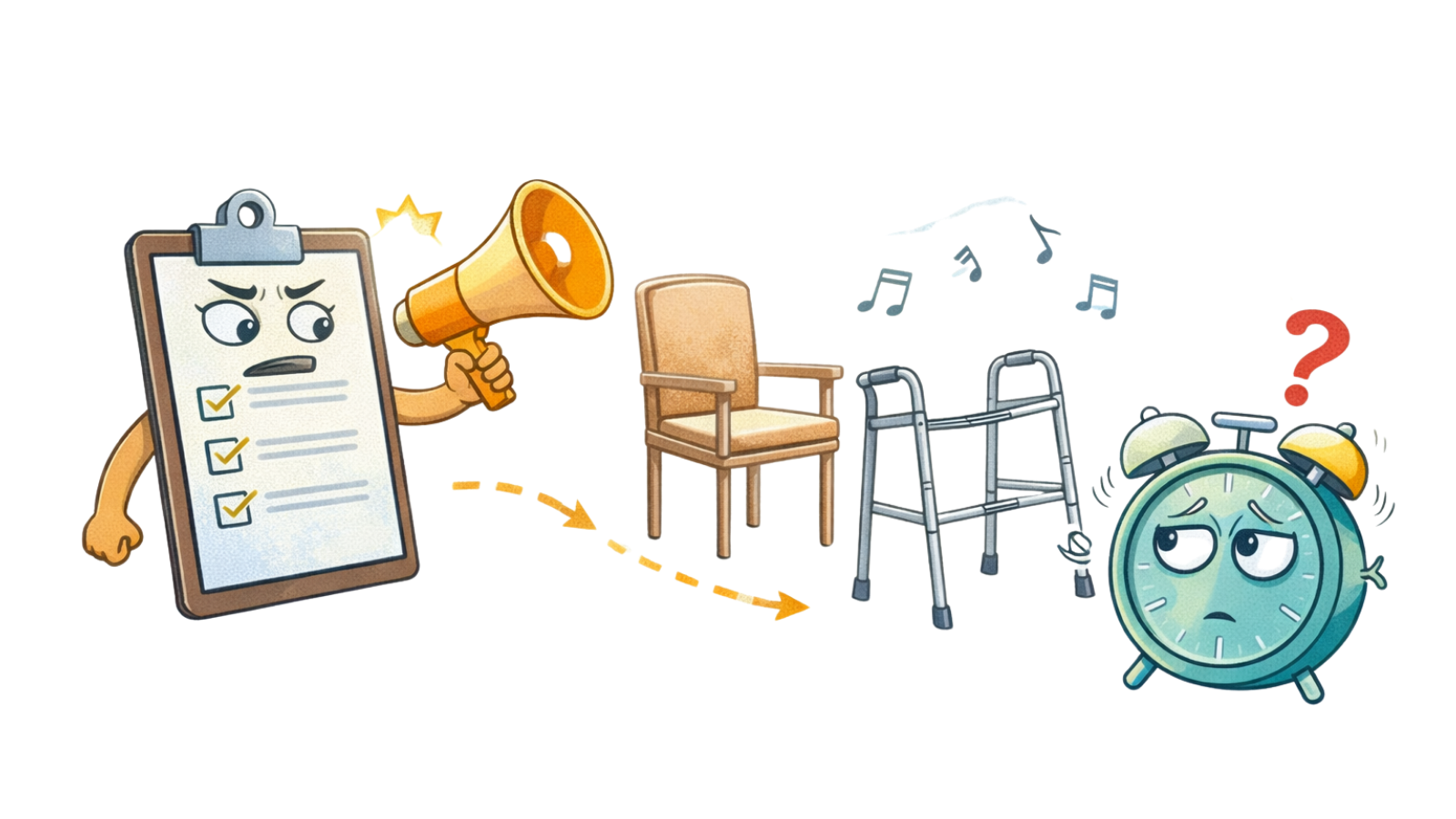
Breakdown #1: Attention Failure
What you’ll see:
- patient misses instructions
- needs repetition immediately
- appears distracted or disengaged
Clinical example:
A patient in PT is learning a transfer.
They require repeated cues every step.
👉 Not memory.
👉 They never attended to the instruction in the first place.

Breakdown #2: Encoding Failure
What you’ll see:
- patient hears information
- but it doesn’t “stick”
- especially if it’s not meaningful
Clinical example:
A patient is taught a home exercise program.
They nod, agree, but cannot recall it later.
👉 The information had no personal relevance.
👉 It was never encoded.

Breakdown #3: Consolidation Failure
What you’ll see:
- patient performs well in session
- but returns next session with no carryover
Clinical example:
A patient completes cognitive tasks perfectly in clinic.
Returns 3 days later—
👉 no recall, no improvement
This is not lack of ability.
👉 This is lack of repetition.
👉 The brain cleared unused information
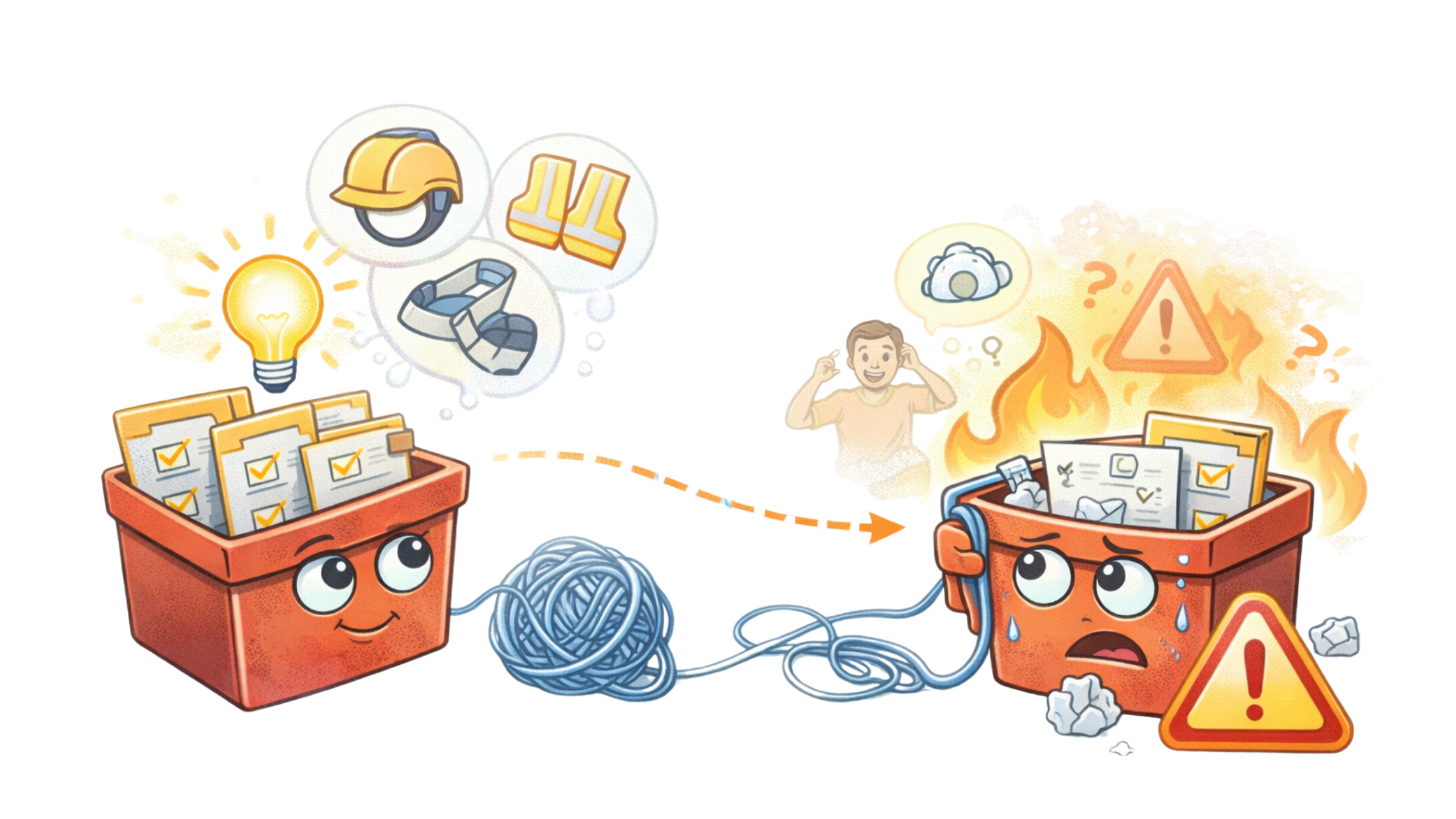
Breakdown #4: Retrieval Failure
What you’ll see:
- patient says “I know this”
- but cannot access it when needed
Clinical example:
A patient knows safety strategies—
but during real activity?
👉 cannot pull them up
👉 This is a retrieval problem

How to Treat This (Real Sessions)
You do NOT treat “memory.”
You treat the step that failed.
If Attention Is the Problem
You target:
- sustained attention (10+ minutes)
- reduced distractions
- repetition with focus
Example:
Instead of giving full instructions:
👉 break into single-step commands
👉 confirm attention before moving on
If Encoding Is the Problem
You increase:
- relevance
- meaning
- connection
Example:
Instead of:
“Do this exercise”
You shift to:
👉 “This will help you get out of your chair safely at home”
Now it matters.
If Consolidation Is the Problem
You increase:
- repetition
- frequency
- carryover
Example:
- written schedules
- repeated practice
- structured home programs
👉 One session a week is not enough for memory change
If Retrieval Is the Problem
You build:
- cues
- systems
- associations
Example:
- visual reminders
- environmental setup
- linking actions to routines
Across Disciplines (Same System, Different Look)
Same breakdown—different presentation:
- OT: cannot complete routines
- SLP: loses track in conversation
- PT: unsafe during mobility tasks
👉 This is not separate.
👉 This is one system showing up differently.
Documentation
✏️ Name the Breakdown
Patient demonstrates impaired attention impacting ability to encode and retain new information.
🔗 Link to Function
Deficits impact ability to follow instructions, complete multi-step tasks, and safely perform daily activities.
🔥 Skilled Intervention
Intervention focused on structured attention training and graded task presentation to support encoding and memory formation.
🗣️ Response
Patient required repeated cueing due to decreased sustained attention, limiting carryover of new information.
⚕️ Medical Necessity
Skilled intervention required to improve attention and memory processes for safe and independent function.
The Clinical Shift
When a patient says:
👉 “I can’t remember”
You should be thinking:
👉 “Where did the system break?”
Memory is not the problem.
The process that builds memory is.
Author Information:
Michelle Eliason, MS, OTR/L
Occupational Therapist & Functional Cognition Educator
Owner, Buffalo Occupational Therapy
PhD Candidate, Rehabilitation Science
Founder of BOT Portal — a clinical system for real-world cognition

Member Resource: Attention & Memory Clinical Application Pack
What's included
Two patient-ready handouts + the clinical application guide below.