BOT Portal Functional Cognition
Join the BOT Portal Functional Cognition Lab Courses & Products Blog
LOG IN
← Back to all posts

Where Memory Actually Breaks (Clinically)

Mar 28, 2026
Connect

In the last issue, we broke down a simple but important idea:

๐Ÿ‘‰ โ€œMemory problemsโ€ is not a diagnosis.

Itโ€™s a starting point.

Because memory is not one thing โ€” itโ€™s a system.

Now weโ€™re going to take the next step:

๐Ÿ‘‰ Where does memory actually break down in real patients?


Start Here: The 3 Breakdown Points

When a patient presents with โ€œmemory issues,โ€ you can simplify your clinical reasoning immediately by asking:

๐Ÿ‘‰ Which level is failing?

  • Working memory (can they hold information briefly?)
  • Short-term memory (can they store new information?)
  • Long-term memory (can they use past experiences?)

This alone will change how you treat.


๐ŸŽฅ Watch the Full Breakdown (22 minutes)

This walks through all 8 types of memory and how they function in real clinical practice.
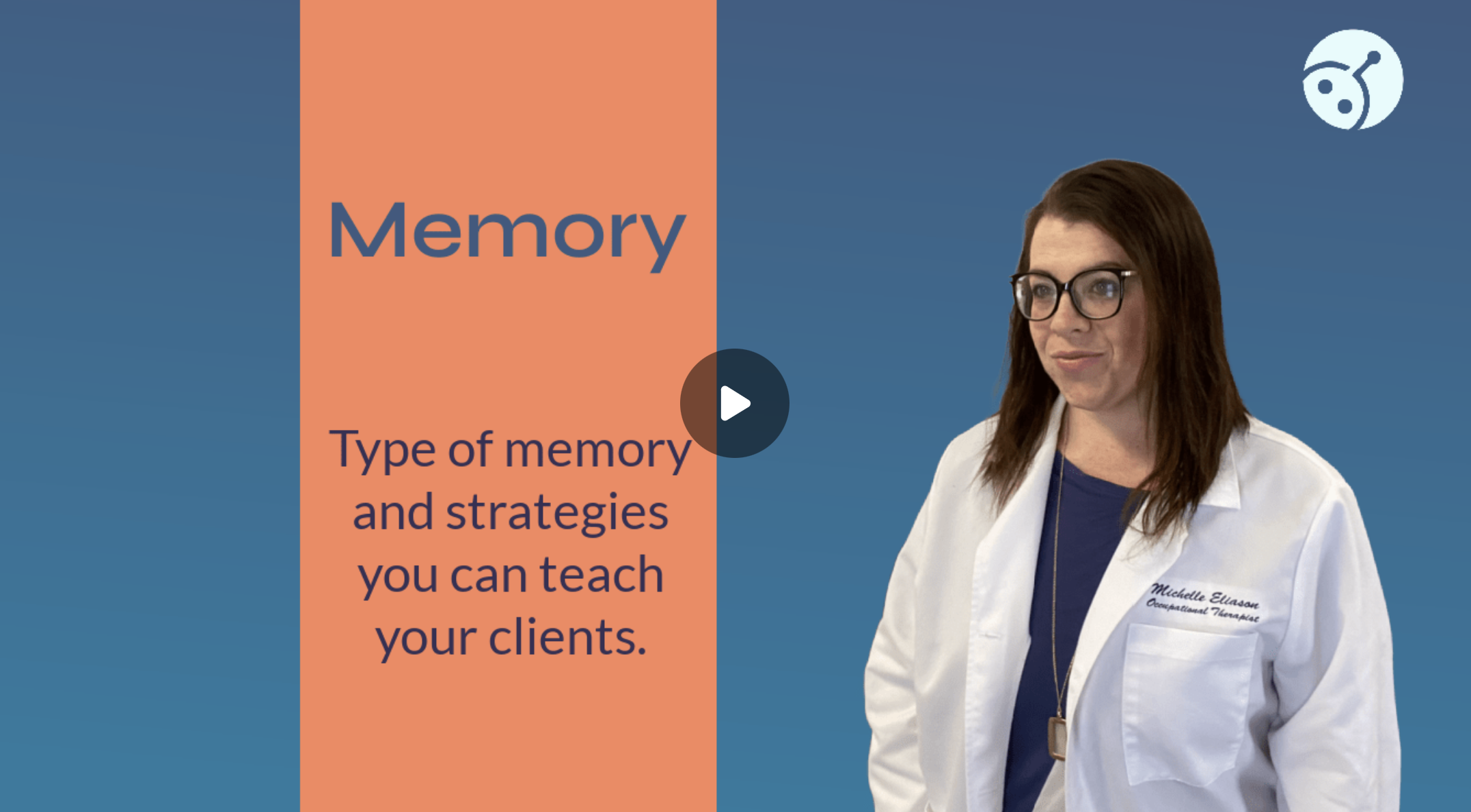
Lesson 1: Types of Memory and Strategies for Occupational Therapy

This content discusses the complexities of memory and the different types of memory from working to long-term. It goes on to explain the ...

app.membership.io

Understanding the levels is one thing.

๐Ÿ‘‰ Knowing how they show up in real patients is what changes your treatment.
This post is for paying subscribers only

Upgrade

Already have an account? Log in

Spastic Hemiplegia โ€” When the Affected Arm Can't Hold Still
ย  ย  Your patient is 71 years old. He has spastic hemiplegia secondary to cerebral palsy. He has lived in this body for seven decades. He is not here because he wants to recover from something that just happened. He is here because there are two things he cannot do โ€” and they are not abstract goals on a chart. He wants to hold a plate with his right hand while his left places a glass on the she...
The Cashier Who Can't Make Change
ย  Your patient works as a cashier. Or they did, before the stroke. Making change. Counting coins out of a drawer into a palm. Holding the handful while the other hand processes the receipt. Sliding the right coin forward with the thumb while the rest stay cupped in the palm. ๐Ÿ‘‰ That is tip pinch, palm-to-finger translation, sustained hypothenar activation, and working memory โ€” in a fifteen-seco...
It's Not Weakness. It's a Missing Motor Plan.
ย  You've seen this patient. They can activate their arm on the table. They can follow your cues in a quiet room. They can hold the bar when you hand it to them. ....But the moment you ask them to move it โ€” to actually sequence the joints, control the load, and bring it back to where it started.... ๐Ÿ‘‰ everything fragments. That's not weakness. ๐Ÿ‘‰ That's a missing motor plan. And this progression ...

Functional Cognition Lab

A weekly clinical training system delivered through short, actionable insights. Designed for occupational, physical, and speech therapy clinicians who integrate cognition into everyday practice.
Member Login Contact Functional Cognition Lab Courses & Products Videos
© 2026 Buffalo Occupational Therapy. All rights reserved.

Join The FREE Challenge

Enter your details below to join the challenge.