
When the Lab Meets the Clinic: What AD Research Really Means for OT
Dec 22, 2025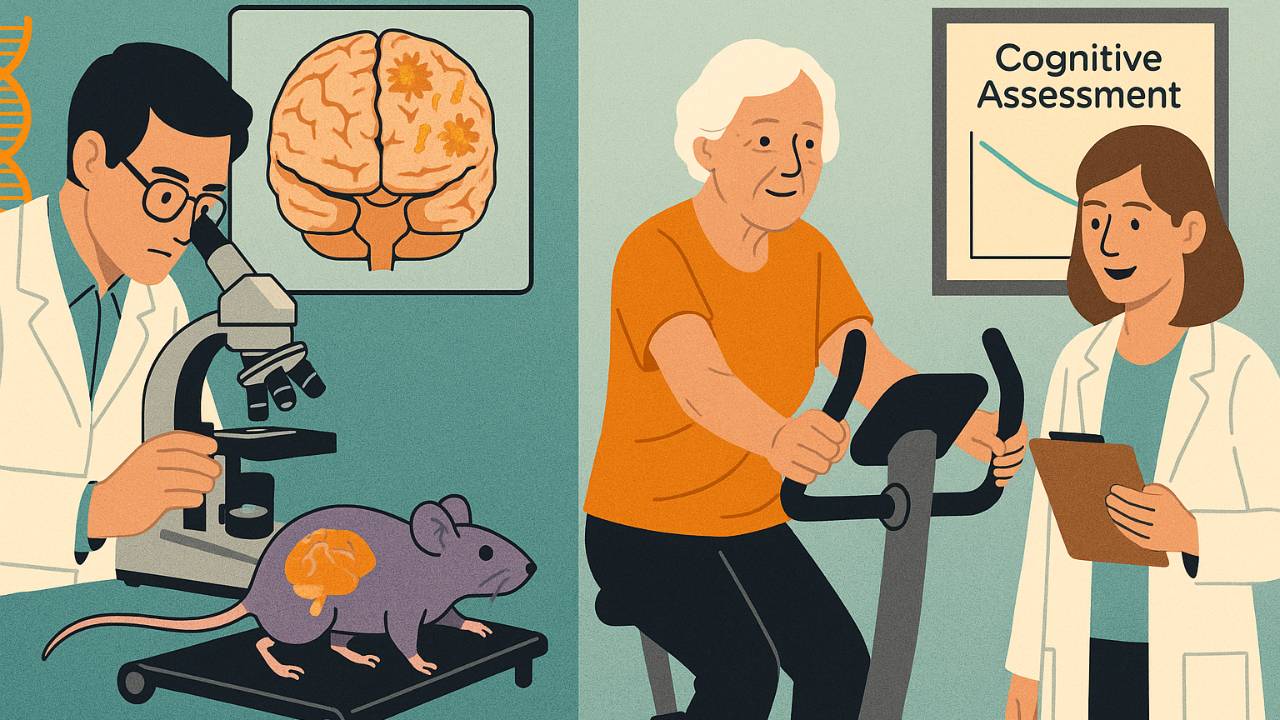
Translational research—moving discoveries from bench to bedside—is often described as T1 research (Trochim, Kane, Graham, & Pincus, 2011). This stage spans fundamental lab science, animal studies, and early human trials. In Alzheimer’s Disease (AD) and other dementias, T1 research focuses on uncovering how the disease forms by examining processes like β-amyloid (Aβ) deposition, neurofibrillary tangles, neuroinflammation, and the health of hippocampal neural networks (Yu, Zhang, Xia, & Xu, 2021).
A pre-clinical study using transgenic mice demonstrated that aerobic treadmill exercise significantly increased new cell survival, boosted proliferating cells (p < 0.05), and reduced Aβ deposition (H. Yu et al., 2021). These findings show a structural, cellular mechanism by which exercise might influence AD pathology.
A related pilot RCT, “Cognitive Effects of Aerobic Exercise in Alzheimer’s Disease,” applied this concept in humans: 96 participants with AD engaged in six months of supervised cycling at 50–75% HRR (F. Yu et al., 2021). Cycling participants showed significantly smaller-than-expected decline on the ADAS-Cog, supporting the hypothesis that aerobic exercise slows cognitive deterioration—though decline still occurred in all groups.
When we compare the dramatic improvements in animal studies with the more modest clinical outcomes, one message becomes clear: humans are vastly more complex. Psychosocial factors, adherence, environment, comorbidities, and disease heterogeneity all dilute the purity of laboratory results.
But this is precisely why grounding clinical research in pre-clinical mechanisms matters. Pre-clinical findings don’t “predict” outcomes—they inform them. They help clinicians and researchers design interventions with a biological rationale rather than guesses.
For OT, understanding bench-to-bedside pathways strengthens our ability to justify interventions, build mechanistic reasoning, and advocate for rehabilitation research that treats exercise not as a generic “activity” but as a targeted, dose-dependent, physiologically active therapy.
References
Trochim, W., Kane, C., Graham, M. J., & Pincus, H. A. (2011). Evaluating translational research: a process marker model. Clin Transl Sci, 4(3), 153–162. doi:10.1111/j.1752-8062.2011.00291.x
Yu, F., Vock, D. M., Zhang, L., Salisbury, D., Nelson, N. W., Chow, L. S., . . . Wyman, J. F. (2021). Cognitive Effects of Aerobic Exercise in Alzheimer's Disease: A Pilot Randomized Controlled Trial. J Alzheimers Dis, 80(1), 233–244. doi:10.3233/jad-201100
Yu, H., Zhang, C., Xia, J., & Xu, B. (2021). Treadmill Exercise Ameliorates Adult Hippocampal Neurogenesis Possibly by Adjusting the APP Proteolytic Pathway in APP/PS1 Transgenic Mice. Int J Mol Sci, 22(17). doi:10.3390/ijms22179570