
Understanding Mechanisms of Change
Dec 08, 2025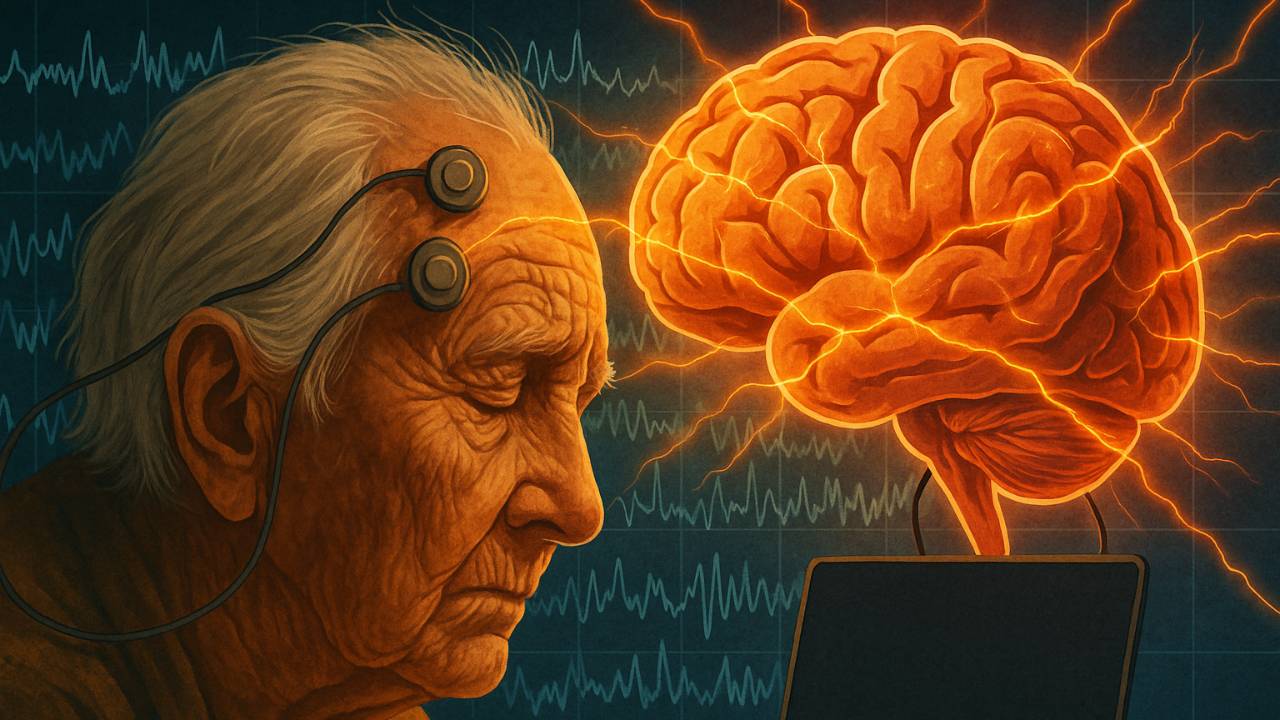
Research on Alzheimer’s disease and memory impairment has exploded in the last decade, and one big question keeps coming up: What actually causes the change we see in our clients?
Some studies show that computer-based cognitive training doesn’t translate to real-world gains unless a trained professional is guiding the process (Moussavi et al., 2021). Others show the opposite—that when the learning environment is structured and a professional is involved, cognitive training can produce far-reaching effects (Moussavi et al., 2021).
Because of this inconsistency, researchers began looking deeper—not just at performance, but at the brain itself. One promising direction involves abnormal neural oscillations (brainwave patterns) as biomarkers of early Alzheimer’s (Targa Dias Anastacio et al., 2022). People with memory impairment often show irregularities in gamma oscillations, which are linked to attention, working memory, and information processing.
This is where non-invasive brain stimulation enters the story.
Both tDCS and tACS can influence neural oscillations (Chase et al., 2020), but tACS is unique because it uses rhythmic, oscillating current—making it particularly suited to targeting abnormal rhythms (Moussavi et al., 2021; Wu et al., 2023).
Animal studies found that tACS applied to the hippocampus can actually restore healthy gamma activity and improve memory performance in transgenic Alzheimer’s-model mice (Wu et al., 2023).
Clinical studies show similar promise: combining tACS with cognitive training over 20 sessions led to significant cognitive improvement that continued even one month later (Moussavi et al., 2021).
The takeaway?
Across animals and humans, evidence points to neuronal hyperexcitability and gamma oscillation disruption as early markers of Alzheimer’s. And interventions like tACS may help normalize those rhythms—opening the door to earlier, more targeted intervention.
What This Means for OTD Students and OT Practitioners Pursuing a Research Path?
If you’re in an OTD program right now (or an OTP pursuing research), this is where the profession needs you—leaning into rigorous mechanisms of change, not just outcomes. We cannot keep accepting “improved function” without understanding why it improved. The next wave of occupational therapy will come from clinicians who:
-
Ask mechanistic questions, not just clinical ones.
-
Link therapeutic actions to measurable neural, behavioral, or psychological changes.
-
Use models like RTSS to articulate not only what they did, but how it created change.
-
Partner with neuroscience, engineering, and gerontechnology fields instead of staying siloed.
-
Challenge program curricula that gloss over mechanism, physiology, or measurement—rigor must be a core professional expectation, not an elective.
-
Embrace technology ethically and strategically, understanding both its promise and its human barriers.
If professors aren’t teaching this? Then yes—speak up. The next generation of occupational therapists must be fluent in mechanism, measurement, and interdisciplinary science. Not because academia demands it, but because our patients deserve a profession that understands how change actually happens.
References
Chase, H. W., Boudewyn, M. A., Carter, C. S., & Phillips, M. L. (2020). Transcranial direct current stimulation: a roadmap for research, from mechanism of action to clinical implementation. Mol Psychiatry, 25(2), 397–407. doi:10.1038/s41380-019-0499-9
Harris, M. T., Blocker, K. A., & Rogers, W. A. (2022). Older Adults and Smart Technology: Facilitators and Barriers to Use. Frontiers in computer science (Lausanne), 4. doi:10.3389/fcomp.2022.835927
Mariano, J., Marques, S., Ramos, M. R., Gerardo, F., Cunha, C. L. d., Girenko, A., . . . de Vries, H. (2022). Too old for technology? Stereotype threat and technology use by older adults. Behaviour & information technology, 41(7), 1503–1514. doi:10.1080/0144929X.2021.1882577
Moussavi, Z., Kimura, K., Kehler, L., de Oliveira Francisco, C., & Lithgow, B. (2021). A Novel Program to Improve Cognitive Function in Individuals With Dementia Using Transcranial Alternating Current Stimulation (tACS) and Tutored Cognitive Exercises. Front Aging, 2, 632545. doi:10.3389/fragi.2021.632545
Targa Dias Anastacio, H., Matosin, N., & Ooi, L. (2022). Neuronal hyperexcitability in Alzheimer’s disease: what are the drivers behind this aberrant phenotype? Translational psychiatry, 12(1), 257–257. doi:10.1038/s41398-022-02024-7
Wu, L., Zhang, W., Li, S., Li, Y., Yuan, Y., Huang, L., . . . Wang, J. (2023). Transcranial Alternating Current Stimulation Improves Memory Function in Alzheimer's Mice by Ameliorating Abnormal Gamma Oscillation. IEEE Trans Neural Syst Rehabil Eng, 31, 2060–2068. doi:10.1109/tnsre.2023.3265378