
Functional Cognition Pattern
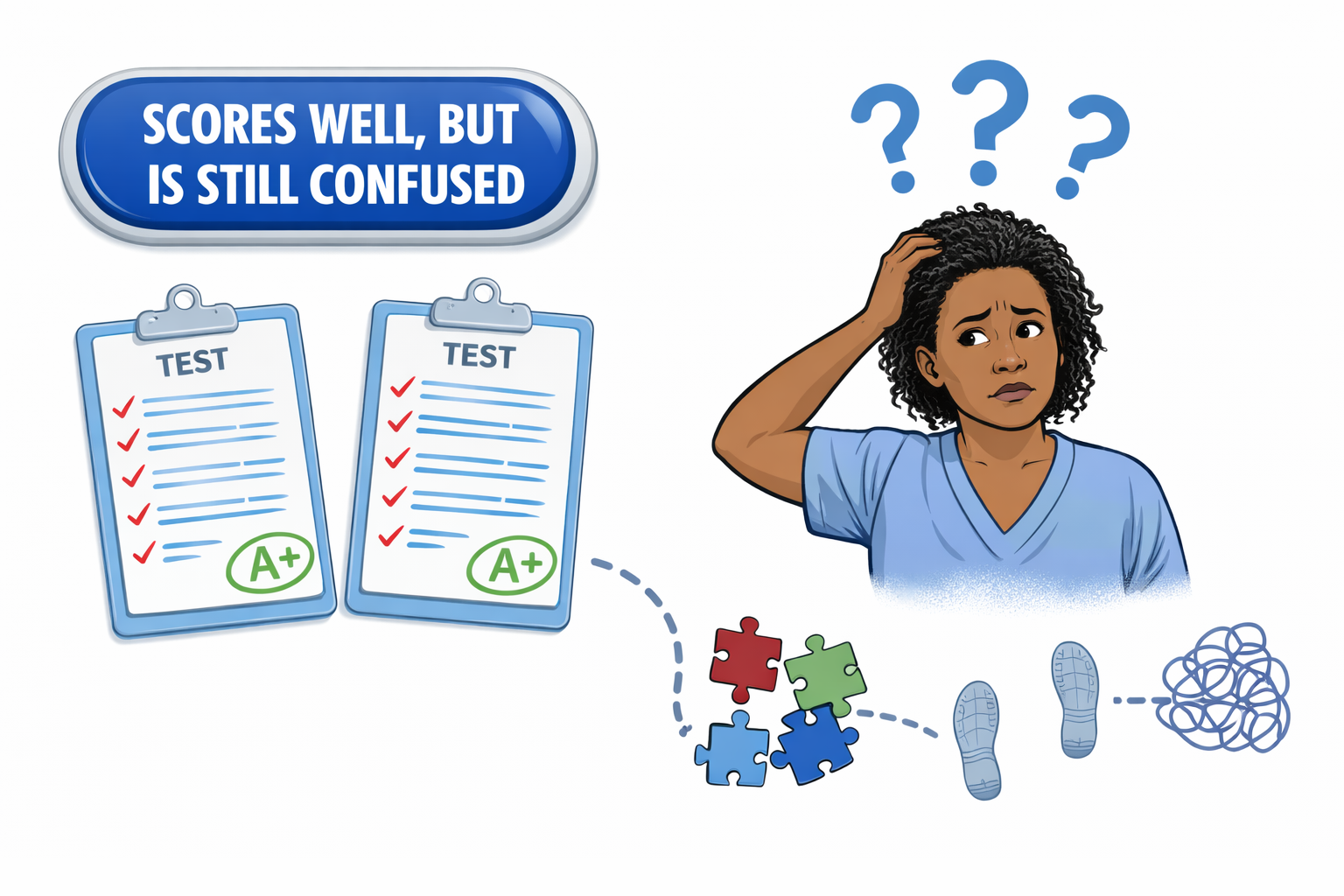
Problem: Scores Well, But Confused
The tests say they’re fine—but real life tells a different story.
What this really is...
A breakdown between what someone can demonstrate in testing...and what they can perform in real life.
→Performance-Capacity Mismatch
What You Are Seeing
- They do well on tests
- But in real tasks, they:
- forget steps
- get stuck
- hesitate
- need more help than expected
It feels confusing—because the scores don’t match the behavior.
What Is Actually Happening
Standardized tests measure skills in controlled conditions.
Real life requires the brain to perform in real time.
- holding multiple steps in mind
- shifting attention
- making decisions on the fly
- adjusting when something changes
These demands are not fully captured by scores alone.
🔎 Real Clinical Example
Patient scores within normal limits on all of your cognitive measures, but...
During functional tasks like exercise, walking, dressing, food preparation, and medication management, they pause, repeat steps, and require cues to continue.
→This issue is not ability
→This issue performance in context
⛓️💥 Skills Breakdown
- Can answer questions → can’t complete a task
- Understands instructions → can’t carry them out
- Recalls information → gets stuck during action
- Looks “fine” in conversation → struggles in real situations
Why This Gets Missed
- Testing is quiet, structured, and predictable
- Real life is fast, messy, and constantly changing
We often expect performance to match the score.
But real-world function requires more than isolated skills.
What To Do About It
- Break tasks into clear, visible steps
- Slow the pace of the activity
- Reduce distractions during learning
- Practice real-life tasks—not just drills
The goal is to improve performance in real situations.
How This Fits Into Clinical Practice
Standardized tests are essential.
They provide objective, measurable data.
But performance in daily life requires integration of multiple skills at once.
- Tests show what someone can do in controlled conditions
- Functional tasks show what they can do in real-world situations
Both are needed to fully understand performance and guide treatment.
These patterns can be observed, measured, and tracked through functional task performance and outcomes.
Want to Go Deeper
This is one of the most common problems in clinical practice!