
Functional Cognition Pattern
Problem: Moves Fine, But Something Feels Off
Strength looks normal—but movement doesn’t feel right in real situations.
What this really is...
A breakdown in the brain’s ability to coordinate movement with attention, timing, and real-time decision-making.
→ Cognitive–Motor Integration Impairment
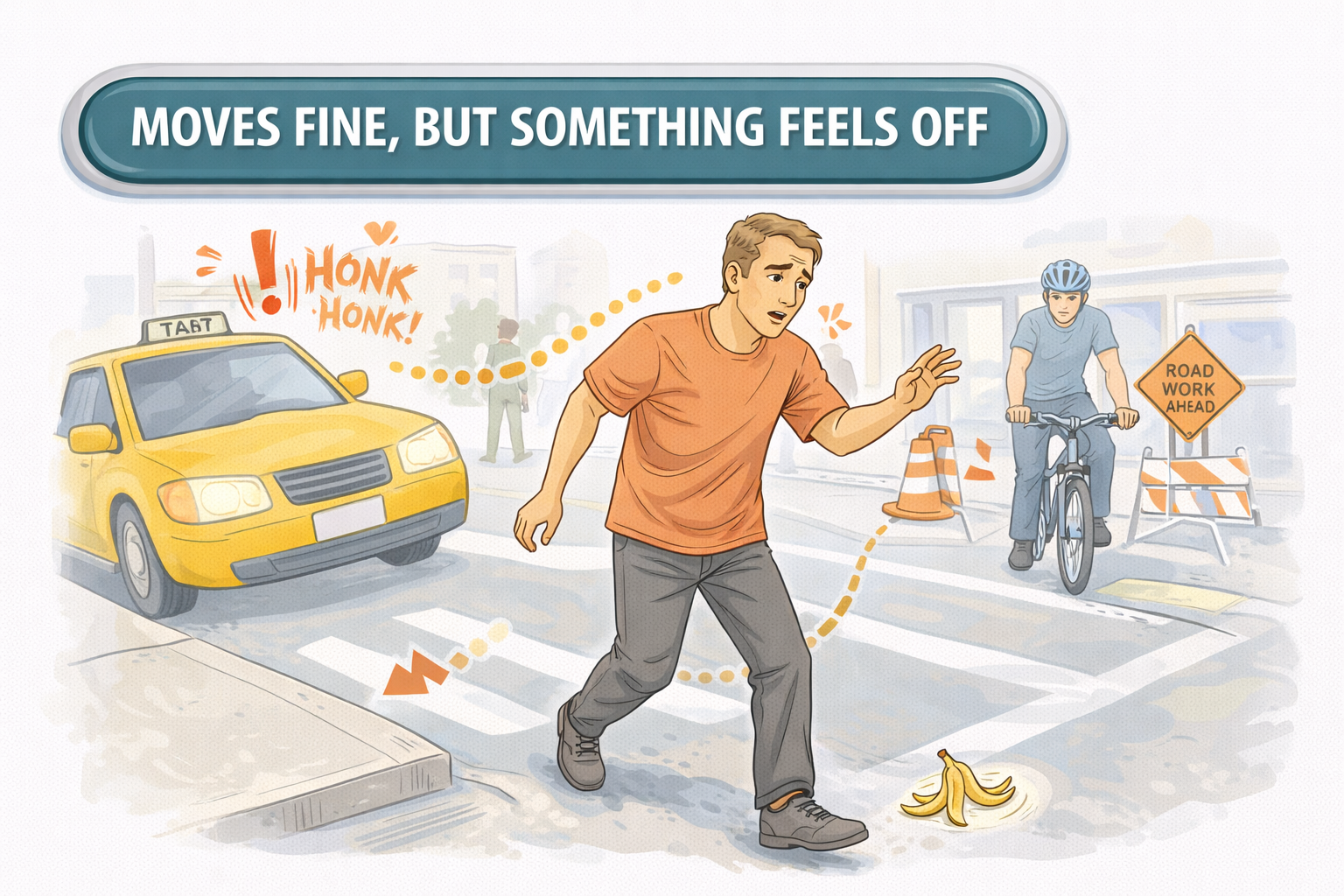
🧠 What You Are Seeing
- Strength and basic movement look normal
- But during real tasks, they:
- hesitate
- move inconsistently
- appear unsure
- make small safety errors
It’s not obvious—but something isn’t right.
⚙️ What Is Actually Happening
Movement is not just physical—it’s cognitive.
The brain must continuously:
- process the environment
- plan movement in real time
- adjust timing and coordination
- respond to changing demands
👉 When this system is disrupted:
- movement becomes less efficient
- reactions slow down
- coordination breaks down under demand
The body can move—
but the brain is not guiding it effectively.
🔎 Real Clinical Example
Patient demonstrates:
- normal strength
- normal range of motion
- ability to walk independently
But during real-world tasks:
- hesitates when approaching obstacles
- misjudges timing or spacing
- becomes less coordinated when distracted
- makes small but meaningful safety errors
→ Motor ability is intact
→ Cognitive control of movement is impaired
⛓️💥 Skills Breakdown
- Walks fine → struggles with obstacles
- Moves independently → hesitates under pressure
- Has strength → lacks timing and coordination
- Appears stable → becomes unsafe in complex situations
⚠️ Why This Gets Missed
- Strength and mobility test within normal limits
- Movement is often assessed in simple conditions
- Problems appear only in dynamic, real-world environments
We assume:
“If they can move, they’re safe.”
But safe movement requires cognitive control.
🛠️ What To Do About It
- Introduce movement in more complex environments
- Add controlled cognitive demand to motor tasks
- Practice obstacle navigation and real-world scenarios
- Train reaction time and timing of movement
At the same time:
- support attention during movement
- build tolerance to cognitive load
- progress from simple → complex conditions
The goal is not just movement—
it’s safe, adaptable, real-world performance.
These are starting points - not full interventions.
Treating this effectively requires structured progression, cognitive-motor integration, and training under real-world conditions.
This is where most clinicians get stuck.
How This Fits Into Clinical Practice
Standardized strength and mobility tests may appear normal.
- Tests measure physical capacity
- Functional tasks reveal cognitive control of movement
Performance can be tracked through:
- reaction time
- hesitation or delay
- coordination under demand
- safety during real-world tasks
This is critical for fall risk, mobility, and independence.
If the brain can’t guide the movement, the movement isn’t safe.
Want to Go Deeper
This is where cognition and movement come together.
Learn how to:
- assess cognitive-motor breakdown
- train movement under real-world conditions
- improve safety and performance