
Functional Cognition Pattern
Problem: Always Overwhelmed
They shut down, get frustrated, or give up—but it’s not just emotional.
What this really is...
A breakdown in the brain’s ability to manage cognitive load and emotional response at the same time.
→ Cognitive Overload with Emotional Shutdown
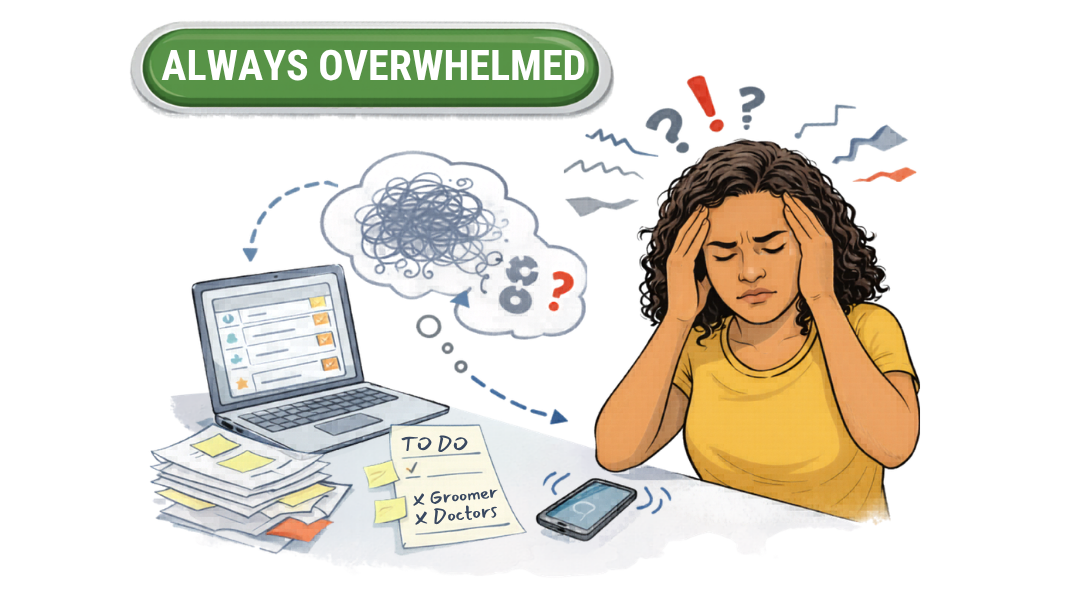
🧠 What You Are Seeing
- They start tasks—but quickly:
- become frustrated
- shut down
- avoid or give up
- say “this is too much”
- Reactions may seem:
- emotional
- disproportionate
- inconsistent
It looks like behavior—but it’s not just behavior.
⚙️ What Is Actually Happening
The brain is trying to process too much at once.
- attention is overloaded
- processing slows down
- errors increase
At the same time:
- stress response increases
- emotional centers activate
- executive function becomes less available
👉 The brain shifts from thinking → reacting
They are not choosing to shut down.
Their system is overwhelmed.
🔎 Real Clinical Example
Patient begins a task like:
- organizing items
- completing paperwork
- preparing a meal
As demands increase:
- they make small errors
- become visibly frustrated
- lose track of steps
- stop or refuse to continue
→ Task demand exceeds cognitive capacity
→ Emotional response takes over
⛓️💥 Skills Breakdown
- Starts tasks → can’t sustain them
- Understands → loses control under demand
- Attempts problem-solving → becomes reactive
- Appears “emotional” → actually overloaded
Why This Gets Missed
- Behavior is labeled as emotional or motivational
- The cognitive load is not recognized
- The environment is not adjusted
We assume:
“They’re overreacting.”
But the brain is exceeding its processing limit.
What To Do About It
- Reduce environmental and task demands
- Start with smaller, manageable steps
- Control the pace of the activity
- Limit competing stimuli
At the same time:
- teach simple coping strategies
- build tolerance to cognitive demand gradually
- support regulation before increasing complexity
The goal is not just task completion—
it’s building capacity and control.
These are starting points - not full interventions.
Treating this effectively requires structured progression, environmental control, and development of cognitive and emotional regulation skills.
This is where most clinicians get stuck.
How This Fits Into Clinical Practice
Standardized tests may not capture performance under stress or high demand.
- Tests measure ability in controlled conditions
- Functional tasks reveal performance under load
Performance can be tracked through:
- task tolerance
- error rate
- need for support
- ability to regulate and continue
Both cognition and emotional response must be considered together.
When the brain is overloaded, thinking shuts down—and emotion takes over.
Want to Go Deeper
This is one of the most misunderstood patterns in clinical practice.
Learn how to:
- identify cognitive overload vs emotional behavior
- adjust task and environmental demand
- build cognitive endurance and regulation